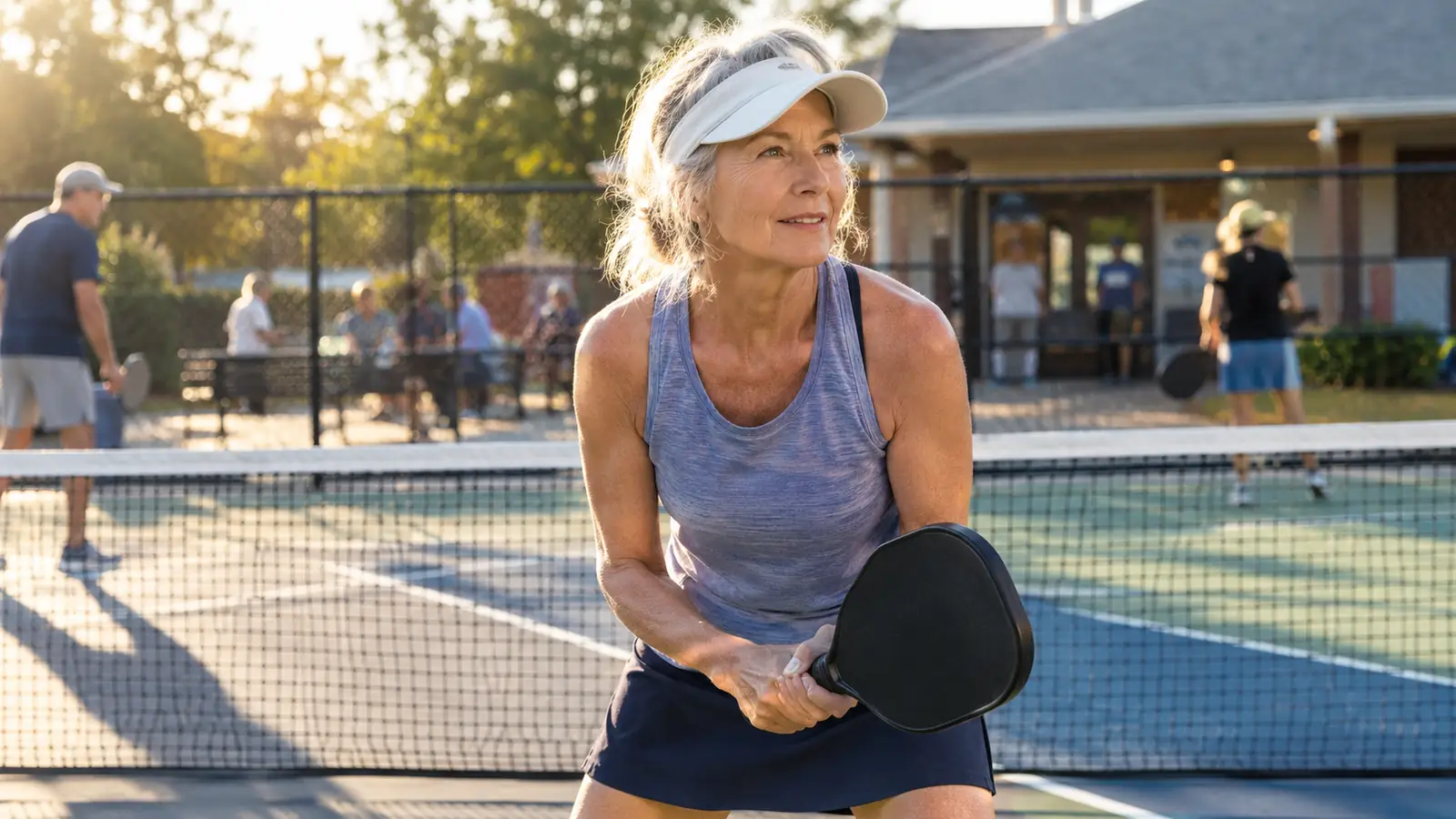
Four mornings a week, I'm on the court by 7:30. The first thing I notice isn't the score. It's whether my right elbow complains when I hit a backhand. I'm Barb, a retired music teacher in Green Bay, and I picked up pickleball about four years ago after Carol dragged me to the community center. I've played through a mild case of tennis elbow that started years ago from carrying instrument cases. So when I heard about the Jojolemon 16mm carbon fiber paddle with the shark power polymer core, I didn't care about the spin hype. I needed to know if it would let me play without wincing. After four months of using it, I have an answer.
I ordered the Jojolemon after Carol mentioned the brand, but I didn't take her word for it. I spent two evenings reading specs and watching a friend who plays at a 4.0 level test one. Then I bought it, because I trust my own elbow more than any review. The first time I unboxed it, the thing that struck me wasn't the carbon face or the core thickness. It was the weight in my hand. It felt solid but not heavy, like a paddle that meant business.
The Quick Verdict
The Jojolemon 16mm is a rare find: it softens the shock for your arm without taking away your touch. If you play recreational doubles and your elbow speaks to you after a bad session, this paddle earns its place in your bag.
Amazon Check Today's Price →Check today's price for the Jojolemon 16mm Carbon Paddle on Amazon
If your current paddle makes your arm ache after a long morning, this is the one to put on your short list.
Amazon Check Today's Price on Amazon →How I've Used It
My first game with the Jojolemon was on a Tuesday morning against a regular group at the community center. Two of the players are solid 3.5s, and one woman, Diane, has a backhand drop that rarely misses. I brought both paddles so I could switch if my elbow flared. By the third point I had stopped thinking about my arm. That is the highest praise I can give any gear. Since then I've used the Jojolemon for roughly 50 sessions, most of them doubles, and it has become my default paddle.
The first week I measured everything. The paddle weighs a touch under 7.8 ounces on my kitchen scale, which is heavier than my old 7.2 ounce model but not so heavy that my wrist tires. The handle is 4.25 inches around, slightly larger than what I was used to. I re-wrapped it once with a thin overgrip to make the circumference match my hand, and that made a bigger difference than I expected. I also noticed the balance point sits a little low, which makes the head feel stable when I block a hard drive.
I keep a small notebook in my bag, so after each session I jot down how my elbow feels that night and the next morning. That habit came from years of teaching music and writing lesson plans. The pattern after the first few weeks was clear: sessions with the Jojolemon left me with a dull ache at most, while the old paddle sometimes gave me a sharp twinge that would wake me at 3 AM. That kind of data is more convincing to me than any clinic test.
One evening in early March, I played a two-hour session with a woman who hammers the ball. By the end, my hand felt tired but my elbow was fine. The next day, I played with my old paddle for one game as a side-by-side test. The difference was obvious: that old paddle sent a sharp vibration up my arm on the first mis-hit. I haven't touched it since.
What That 16mm Core Actually Did for My Elbow
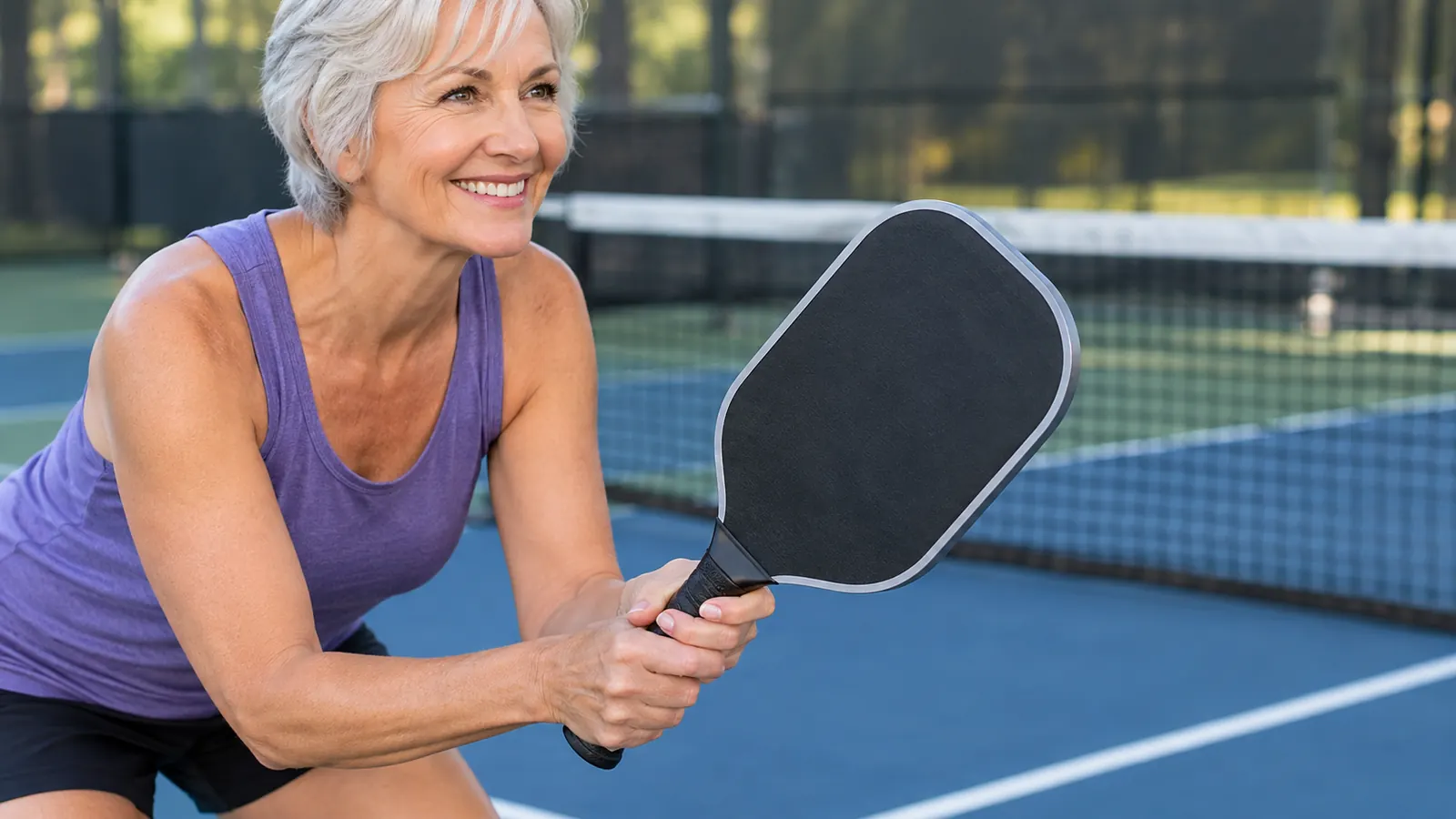
I'll be honest: the 16mm core isn't magic. My elbow still complains on cold mornings, especially after three games in a row. But the Jojolemon takes the sharp edge off the impact. When I hit a backhand off-center, the vibration that used to run up to my elbow now stops at my hand. The difference showed up the second week, when I realized I wasn't reaching for the ice pack after every session. I still ice after long mornings, because I'm 61 and my body keeps its own calendar, but the soreness is a low hum instead of a sharp note.
Part of that likely comes from the thickness. A 16mm core gives the ball a fraction more time to compress, which changes how the impact travels through the paddle. It isn't a pillow, and you still feel the ball, but it feels like a solid thud rather than a ping. I tested it on a day when the temperature hit 40 degrees and the ball felt dead. The paddle still gave me enough pop to keep the ball moving, and I didn't feel the cold shock in my hand the way I used to with my old paddle.
I should also say it didn't change my serve. My serve is still the least scary part of my game, and no paddle is going to fix that. But the more I used the Jojolemon, the more I trusted it on third shot drops scrambles near the net. That trust is hard to measure, but it's why I reach for it when the game matters.
I also asked a friend who owns a paddle shop which thickness he recommends for players over 50. He said many players are moving to 16mm because the extra core depth cuts down on the ping that bothers arthritic hands. That matched what I felt. The Jojolemon isn't the only 16mm paddle out there, but it's the one that made sense for my budget and my wrist.
Spin, Control, and the First Week of Adjusting
The carbon face has a nice texture that grabs the ball on heavy spin, and I could feel it within the first five minutes. My drop shots started landing with less skid, and my third shot drops felt more deliberate. That was the good part. The tricky part came when I tried to dink. The extra pop from the thicker core sent a few of my dinks sailing two feet past the kitchen line. For the first week I had to remind myself to soften my hand. By week two, my dinks settled back in, and I stopped blaming the paddle.
What surprised me most was how stable the paddle felt on resets. When Carol ripped a drive at my feet, I didn't have to fight to keep the face square. The paddle absorbed the pace and sent the ball back with control. That doesn't make me a better player, but it makes me a less panicked one. I play a lot of doubles, and those quick exchanges at the net are where the Jojolemon earns its keep. It lets me react without my wrist flexing into a position that aggravates my elbow.
I also noticed that the paddle helped me on blocking returns. When a hard shot comes right at my chest, I used to flinch and let my wrist twist. With the Jojolemon's stable head, I can keep my wrist neutral and just take a half-swing. That has cut down on the sharp pains I used to get after a morning of playing against power hitters.
I tried a few deliberate spin serves the third week, and the carbon face let me put more rotation on the ball than I expected. I still can't hit a serve that curves like a pro, but I can see why players who rely on spin would like this paddle. For me, the bigger win was the control on resets.
The Grip, the Weight, and the Way It Sits in Your Hand
The stock grip is a standard cushioned grip, not too squishy and not too slick. I have a medium hand size, and the 4.25 inch circumference felt close to my old paddle. After about six weeks, the grip started to wear where my index finger rests, so I added a thin overgrip. That's normal maintenance, not a flaw. The weight and balance are what I notice most. The paddle's balance point is slightly toward the handle, which keeps the head from feeling heavy when I'm at the line. That matters to me because a head-heavy paddle makes my elbow ache after an hour.
One morning I forgot to bring my overgrip and played with the stock grip for a whole session. The contrast taught me that the grip swap was more important than the paddle itself. With the thin overgrip, the handle feels like an extension of my hand. Without it, the handle rotates a hair too much on hard shots. So my advice: if you buy this Jojolemon, plan on adding an overgrip. It's a small change and it makes a noticeable difference in how the paddle feels over a 90 minute session.
I've also tried a few different overgrip thicknesses. The thin one worked best for me because it added just a little tack without changing the circumference much. My friend Carol prefers a thicker wrap on her paddle because she grips tight when she's nervous. That's the kind of detail that separates a paddle you play with from a paddle you simply own. You have to be willing to tune it to your hand.
The sweet spot is generous, which helps when I don't center the ball. My misses are more often toward the top of the face, and the Jojolemon still sends those shots with enough pace to keep the point alive. That's a forgiving quality that matters as the morning wears on.
Durability and the Everyday Wear
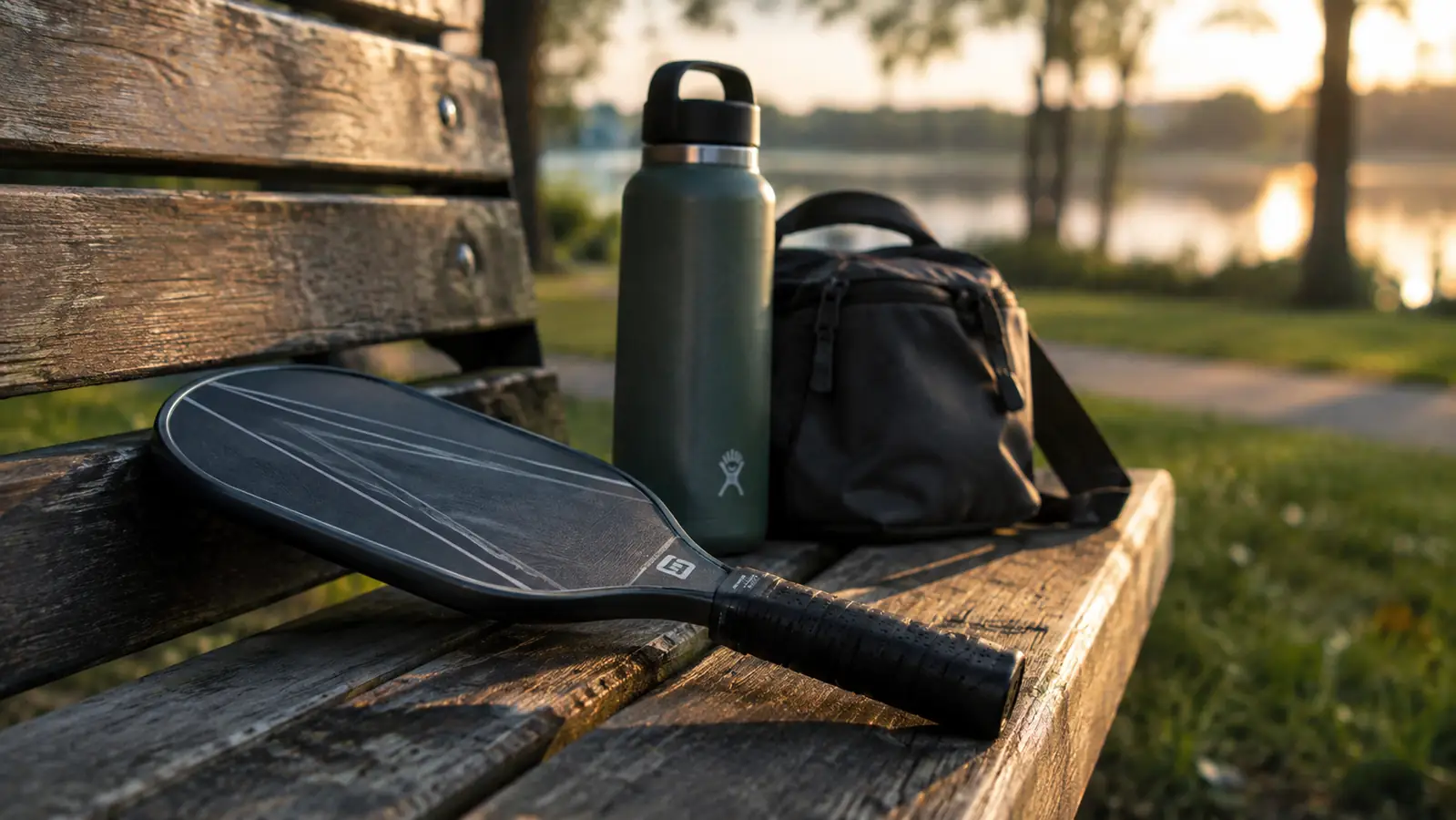
I've used the Jojolemon for about four months now, roughly 50 sessions. The face still looks good, with light scuffs from digging balls off the ground but no cracks or peeling. The edge guard has a few dings from when I dropped the paddle on the court, but it did its job and the paddle is no worse for it. The grip is the only part that has shown real wear, which is expected since it's the part I touch the most.
I also tested it on a couple of windy mornings at the park. When the wind pushed the ball around, the heavier weight helped me keep the face steady on drives. I had to be careful not to overswing, but the paddle rewarded a compact stroke. That's exactly what I needed as I get older. It doesn't want to be muscled; it wants to be guided. If you try to overpower it, the extra weight will tire your arm faster.
I also want to mention the paint job. There's no chipping around the edges, which surprised me because I've seen paddles lose finish after a month. The surface is smooth where it started, and the graphics haven't faded. I keep it in a padded sleeve when it's in my bag, but I don't baby it. It's meant to be played with, not displayed.
One rainy afternoon I left the paddle in my trunk for three days. It sat in a warm car, and I worried the glue might soften. When I took it out, the face and core felt exactly the same. I don't plan to make a habit of leaving it in a car, but it's reassuring to know a little humidity doesn't ruin it.
What I Liked
- 16mm core noticeably dulls the shock that used to reach my elbow
- Carbon face offers reliable spin on spins and dinks
- Weight and balance suit a player who wants control over raw power
- Edge guard and face have held up well after four months
Where It Falls Short
- Extra pop from thicker core requires a week or two of adjustment
- Stock grip wears faster than I'd like
- Not the lightest option for quick wrist flicks
- Overgrip is really required for the best feel
I didn't need a paddle that promised to cure my elbow. I needed one that let me forget it while I was on the court.
Who This Is For
This paddle is for the player who shows up four mornings a week, plays recreational doubles, and wants a reliable stick that won't aggravate a sore elbow. It's also for someone moving up from a beginner paddle and looking for more control without a steep learning curve. If you're willing to spend a few extra weeks adjusting to a thicker core, the payoff is a paddle that feels solid, predictable, and easy on your arm. If you play a few sessions a week and keep a spare overgrip in your bag, you'll get a lot of mornings out of it.
Who Should Skip It
If you're a power player who relies on a light, whip-fast paddle for quick wrist flicks at the kitchen line, the Jojolemon may feel a little heavy. If you're already comfortable with a thinner core and you hate changing your timing, you might find this one too forgiving. And if you play once a month, you don't need to spend this much. There are cheaper paddles that will do the job for casual weekends. This one shines when you're on the court often enough to build a relationship with it.
Ready to give your elbow a break?
The Jojolemon 16mm Carbon Paddle is built for players who want control without the ping. Check today's price on Amazon and see if it earns a spot in your bag.
Amazon Check Today's Price on Amazon →