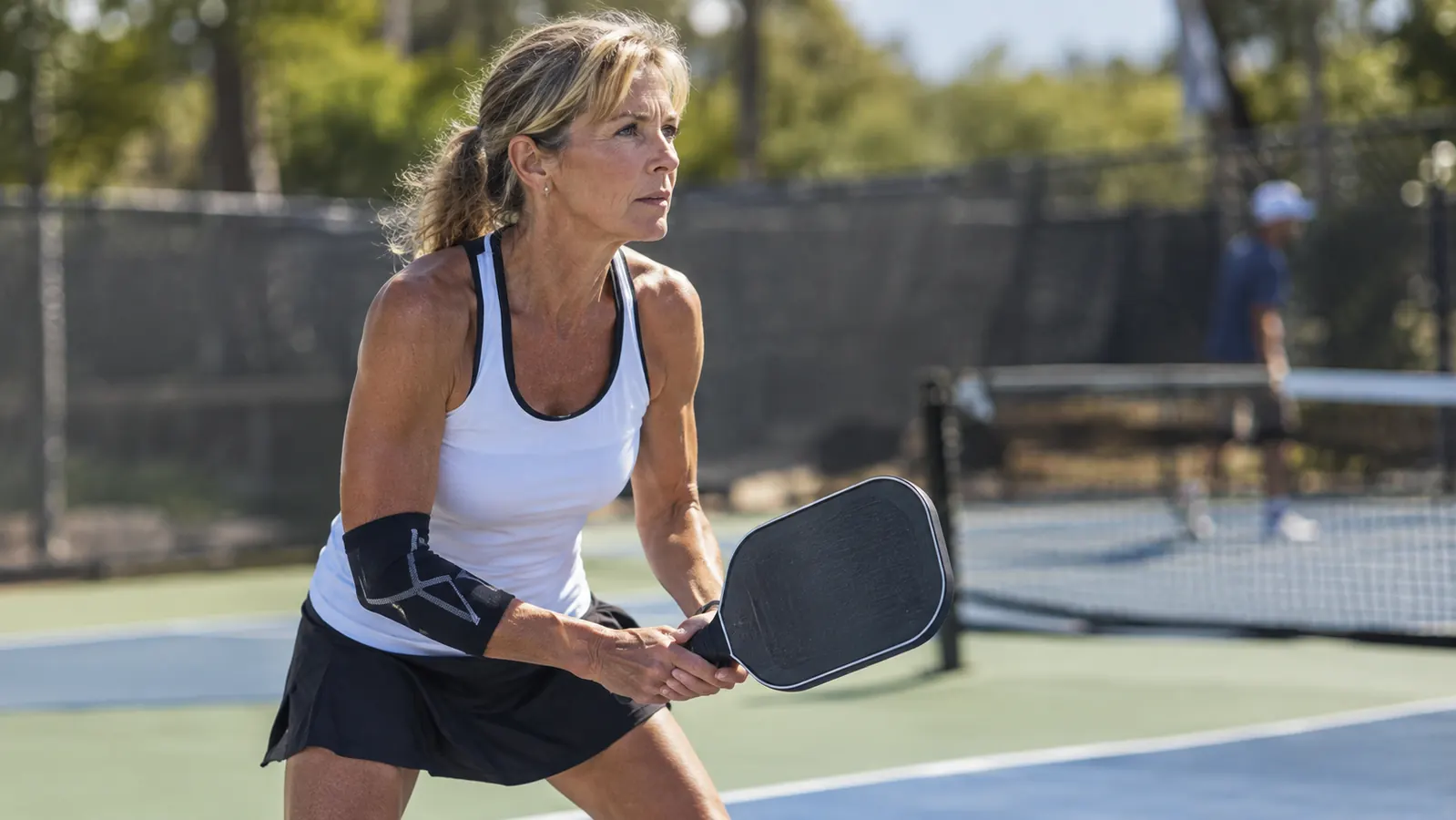
The first time my right elbow barked mid-game, I thought I had hit the ball wrong. It was a Tuesday in late September, third game of the morning, and I had just reached for a backhand that was slightly behind me. The twinge ran from the bony bump on the outside of my elbow down into my forearm, and for the next two points I could not grip my paddle the way I normally do. I am Barb, I am 61, and I have played pickleball four mornings a week for about four years. I also have a touchy right elbow from decades of carrying instrument cases as an elementary school music teacher. This guide is how I kept playing through it, including the day I finally tried a Sleeve Stars elbow brace and the five steps that got me back to the park courts without sitting out the season.
I am not a doctor and this is not medical advice. If your elbow hurts at rest, swells, or keeps you up at night, see somebody. What I can tell you is what worked for a 3.5-level doubles player who refused to give up her four mornings a week.
The Brace That Let Me Finish the Season
A Sleeve Stars elbow brace puts gentle compression right where the tendon attaches, so I could keep my grip loose and my backhand honest. It is the first thing I reach for on game days now.
Amazon Check Today's Price on Amazon →Step 1: Change Your Grip Before You Change Anything Else
The morning my elbow first flared up, I was gripping the paddle like I was mad at it. Death grip is the number one reason recreational players get elbow trouble, and I was the poster child. The fix is not complicated, but it takes a week of conscious effort. Hold the paddle so lightly that someone could pull it out of your hand without a fight. Your index finger and thumb do the steering. The other three fingers just rest there. When I finally tried this, my shots got softer and my elbow stopped complaining after about ten minutes of play.
Here is the test I use now. Before every game, I hold the paddle out and shake it gently. If the handle moves around in my hand, that is too loose. If my knuckles are white, that is too tight. The right grip is somewhere in between, and it changes as the game goes on. When I get nervous in a close game, I catch myself squeezing again. I have learned to reset between points by wiggling my fingers and saying out loud, light grip, light grip. It sounds silly, but it works.
One more thing about grip: check your paddle grip size. A grip that is too small makes you squeeze harder to keep the paddle from twisting. I measured mine the way the internet told me to, from the crease in my palm to the tip of my ring finger, and it came out to about 4 and 1/8 inches. My paddle was close enough, but I added a thin overgrip anyway to give my hand a little more to hold onto. That one change, plus the lighter grip, took more pressure off my elbow than any other single adjustment.
Step 2: Warm Up the Forearm, Not Just the Legs
I used to walk onto the court, do two lunges, and start playing. That is exactly how I got hurt. Now I spend eight minutes before every session on the muscles that actually move the paddle. The routine is simple: wrist curls with a one-pound dumbbell, reverse wrist curls, and a stretch where I hold my arm out straight, palm down, and gently pull the fingers down with the other hand. I hold each stretch for twenty seconds and I do not bounce.
The warm-up that made the biggest difference was the one I almost skipped. It is called an eccentric wrist extension. I hold a light dumbbell in my right hand, palm down, rest my forearm on my thigh, and slowly lower the weight for a count of five, then use my left hand to help bring it back up. I do two sets of ten. The first time I tried it, my elbow felt sore the next day, which my physical therapist friend said was normal. After two weeks, the background ache I had been carrying since October was mostly gone.
I also warm up the grip itself. I squeeze a soft tennis ball for thirty seconds, then open my fingers wide and repeat. It sounds too easy to matter, but it gets blood moving into the flexor muscles that attach right at the elbow. On cold mornings at the outdoor courts, I do the whole routine in the car with the heat on before I even walk to the fence. By the time I step onto the court, my forearm feels loose instead of tight.
Step 3: Pick a Paddle That Does Not Fight Back
Paddle weight and stiffness matter more than most recreational players think. My old paddle was a heavy, stiff graphite model that I had bought because it was on sale. It weighed about 8.4 ounces and it transferred every vibration straight up my arm. After my elbow flared up, I borrowed Carol's lighter paddle for a morning and the difference was immediate. My elbow did not ache after three games the way it usually did.
I did not go out and buy the most expensive paddle on the wall. I looked for three things: a weight under 8 ounces, a handle long enough for two hands on a backhand, and a core that absorbs vibration. A lot of paddles now advertise a honeycomb core or a dampening layer, and I am not going to pretend I can feel the difference between every brand. What I can tell you is that my current paddle, which weighs 7.8 ounces, feels noticeably softer on off-center hits than the 8.4-ounce one did.
If you cannot switch paddles right away, there is a cheaper fix. Add a vibration dampener, the little rubber thing that goes in the strings of a tennis racket, to the throat of your paddle. It does not work on every paddle, but on mine it took the sharp edge off the ping. I also stopped swinging so hard. Pickleball is a game of placement, not power. When I finally accepted that my job on the court is to keep the ball low and let the other team make the mistakes, my elbow got a lot happier.
Step 4: Wear the Brace the Right Way
I was skeptical about elbow braces. I had tried a cheap elastic sleeve from the drugstore and it did nothing except slide down my arm. Then a friend who plays three times a week told me about the Sleeve Stars brace, and I ordered a pair mostly because the price was reasonable and the reviews were good. The package arrived on a Thursday, and I wore one to the Friday morning game at the rec center.
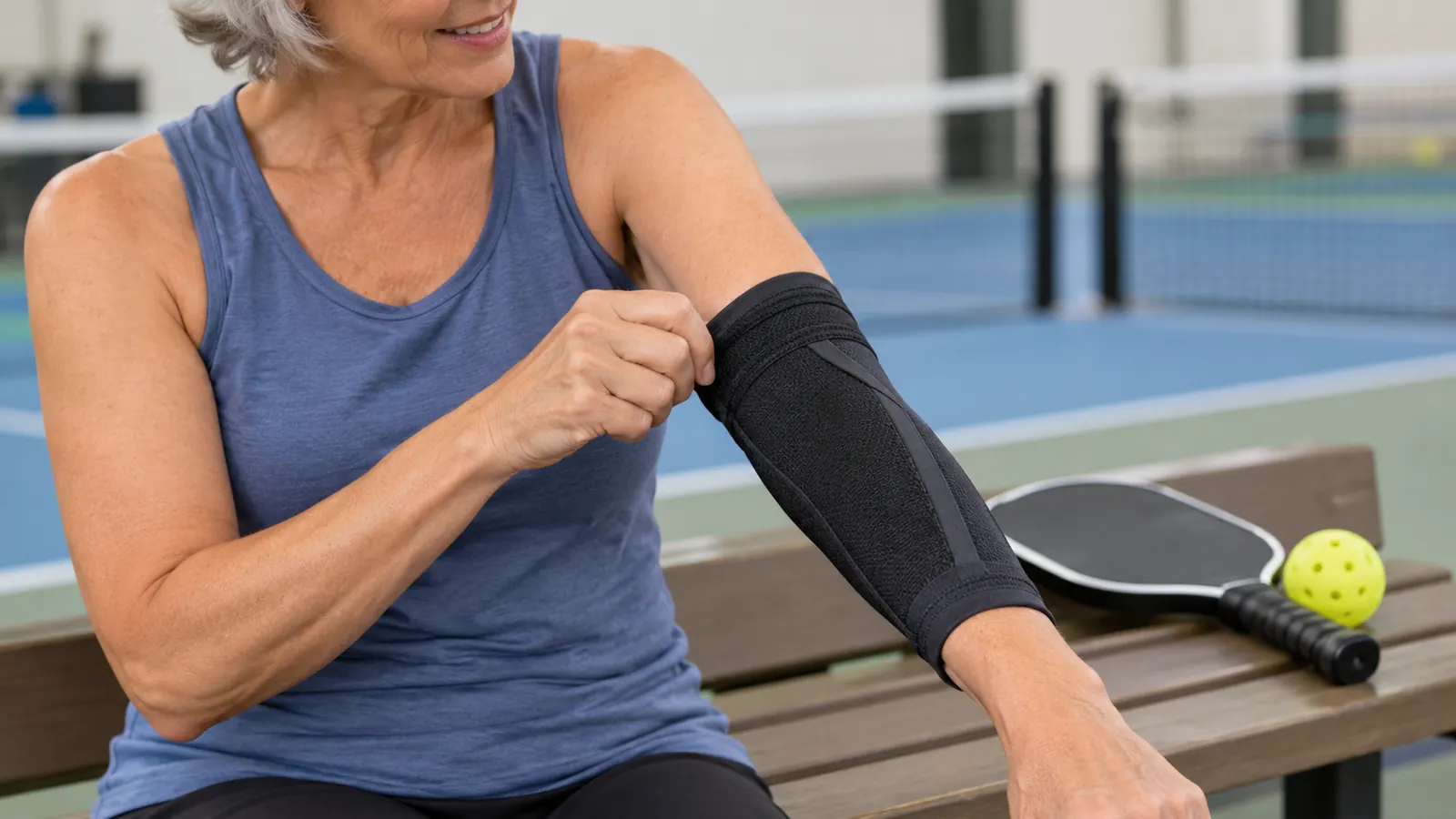
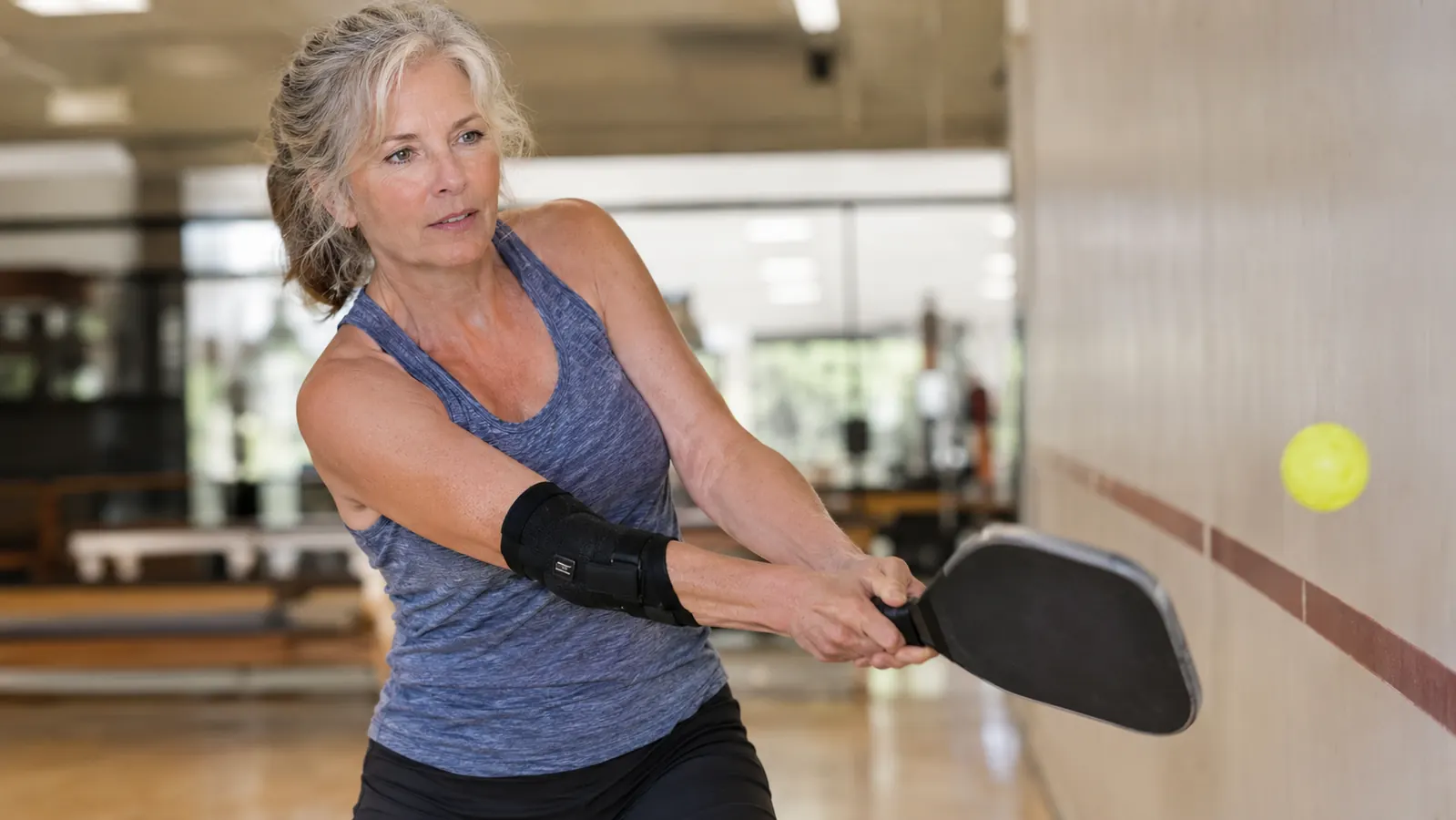
The first thing I noticed was the fit. The Sleeve Stars brace has a wide band that sits about an inch below the elbow, with a strap I could tighten to the point where it felt snug but not cutting off circulation. I put it on over a thin long-sleeve shirt because the edge of the band can rub if you wear it directly on skin all morning. The instructions that came with it said to position the pad over the tender spot on the outside of the elbow, and that is exactly where mine hurt.
Here is what surprised me. The brace did not make my elbow feel better while I was sitting still. It made my shots feel better. With the compression holding the tendon in place, I did not flinch on backhands, and because I did not flinch, I did not grip tighter. I played three games that Friday and my elbow was no worse the next day. That was the first time that had happened in six weeks. I now wear the Sleeve Stars brace for every game, and I keep the second one in my bag for Carol on the days her elbow acts up.
Step 5: Change How You Play, Not Just What You Wear
The brace is a tool, not a cure. I learned that the hard way when I wore it for a week and kept playing the exact same way, and my elbow still complained. The real fix was changing my mechanics. The biggest change was my backhand. I used to hit it with one hand and a bent elbow, which put all the force through the tendon. Now I use two hands whenever I can get to the ball in time, and I turn my shoulder toward the ball instead of reaching across my body.
I also stopped reaching for balls that were behind me. It is better to let a ball go than to twist my elbow trying to dig it out. My partner Carol and I have a rule now: if the ball is past your hip, let it go and reset the point. We lose a few points that way, but we also play four mornings a week instead of two, and we are both still having fun in March when the indoor season is dragging on.
The other change was mental. I used to play through pain and call it toughness. Now I treat the first twinge as information. If my elbow starts to talk, I take a two-minute break, re-tighten the Sleeve Stars brace, and do a quick forearm stretch. If it still hurts after the break, I sit out the next game and cheer for Carol. That sounds obvious, but it took me a whole season to learn that sitting out one game is cheaper than sitting out six weeks.
What Else Helps
Ice after playing, not before. I keep a gel pack in the freezer and put it on my elbow for fifteen minutes when I get home. Ibuprofen helps when I remember to take it before the game instead of after. I also switched to a paddle with a longer handle so I can use two hands on more backhands, and I stopped carrying my paddle bag on my right shoulder. Little things add up. The Sleeve Stars brace is the piece I would not play without, but it works best as part of a routine that includes a lighter grip, a proper warm-up, and a willingness to sit out one game when your body asks for it.
I played three games that Friday and my elbow was no worse the next day. That was the first time that had happened in six weeks.
Keep Your Four Mornings a Week
The Sleeve Stars brace is the reason I finished the fall season instead of watching from the bench. If your elbow is talking to you, this is the cheapest conversation you will have all year.
Amazon Check Today's Price on Amazon →