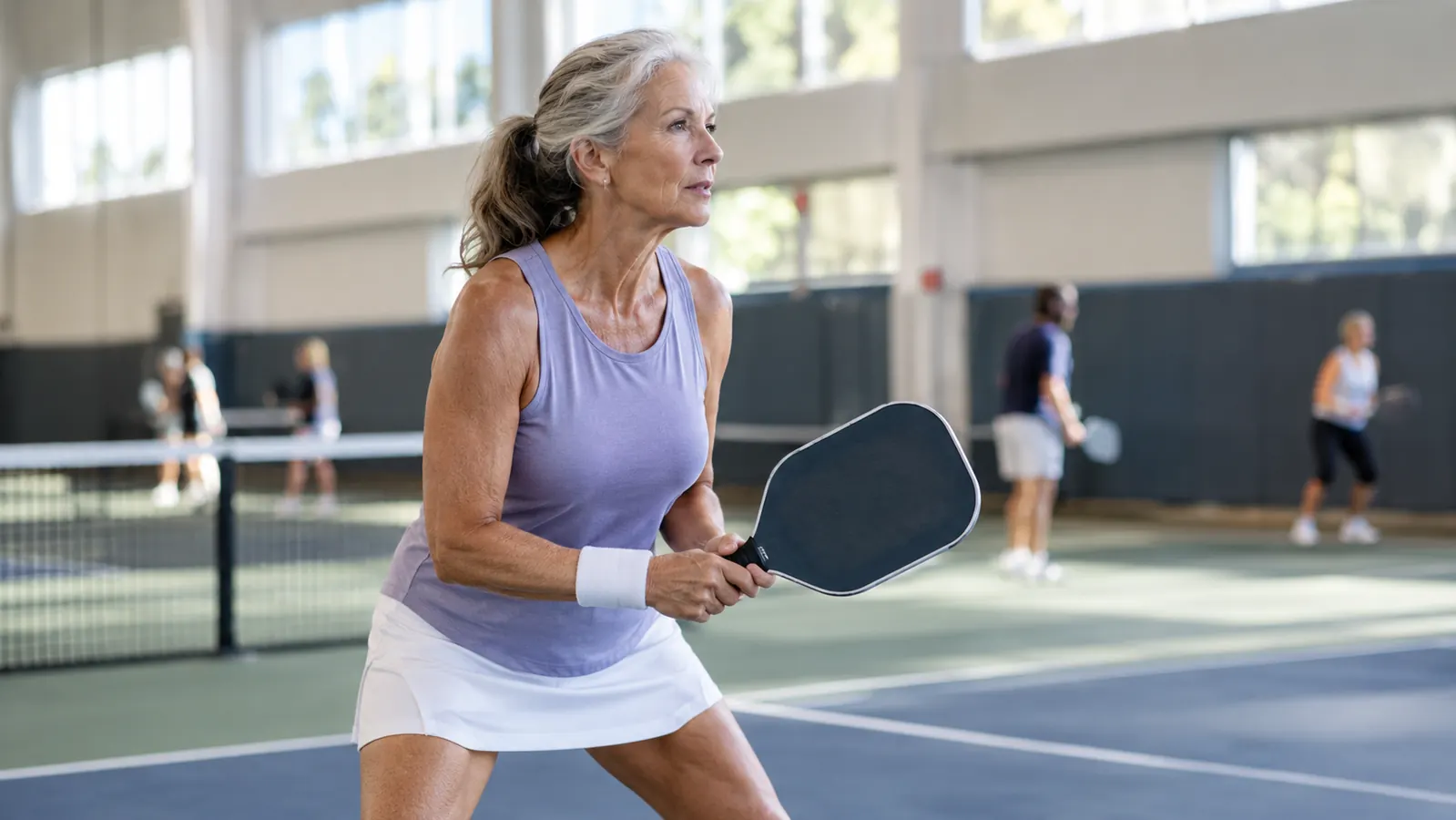
I didn't set out to join a rec league. Four years ago, my friend Carol talked me into open play at the Green Bay community center on a Thursday morning, and I was the person holding the spare paddle with the worn grip, the one that sounded like a frying pan every time the ball touched it. I missed a lot in that first hour. I remember standing at the baseline thinking everyone else had been at this for years and I was the only adult on the court who had no idea which line was the kitchen. It was humbling, and it was also the most fun I'd had on a weekday morning in a long time.
Here is what I know now that I couldn't see then: nobody at open play cared that I was new. The regulars want more people to play with, so they are thrilled when a beginner shows up. And the thing that moved me from 'maybe I'll try it' to a regular Tuesday night league game was simple. I stopped borrowing paddles and bought the MTEN set, one for me and one for Carol, so we could drill together on the park courts between league nights. If you are standing where I was standing, this is the path I wish someone had handed me.
Own your paddle before your next open play
The MTEN set puts two USAPA approved fiberglass paddles in your bag. Keep one, hand the other to a friend, and you have a built in reason to show up next Thursday.
Amazon Check the MTEN Set on Amazon →Step 1: Find the least intimidating open play near you
Before you think about leagues, find the open play where nobody is going to intimidate you. Search 'pickleball open play' plus your town, and look for community centers, parks and rec departments, senior centers, and YMCAs. Call ahead and ask one simple question: is this drop in friendly to beginners? The people on the phone will tell you straight. Some sessions are advanced play only and some are mixed. You want the mixed one.
At my center, Thursday morning is mostly folks 50 and up who have been playing anywhere from six weeks to six years. There is a rotation board, and you write your name on the list. Winners stay on, losers rotate back in, but nobody keeps score like it matters. When a ball trickles over the net cord, you play the point over. When you miss an easy one, somebody says nice try. There is a woman named Dottie who has been playing since the courts were painted, and she will beat you with a paddle older than your car, and then she will tell you exactly what you did right. You want that person in your life. By the second Thursday I knew half the names on the board, and by the third somebody saved me a spot in the rotation.
The four words you need on day one: I'm new at this. Say them before you pick up the paddle. The whole court shifts from competitor to coach in one sentence. You will get tips, you will get encouragement, and you will get at least one person who insists you stand at the kitchen line instead of the baseline. Take that advice. It is good advice.
Step 2: Get a paddle that's actually yours
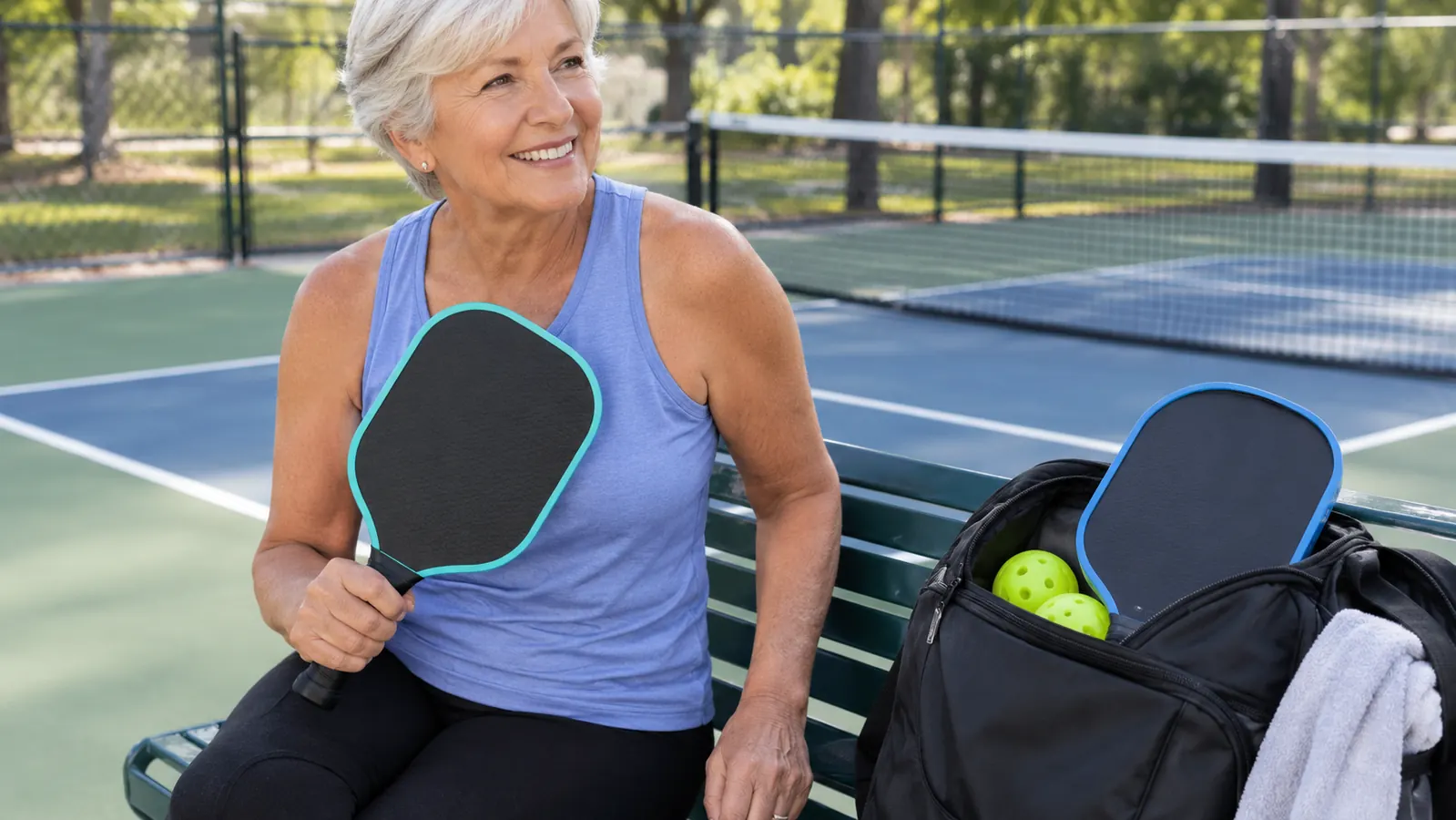
Borrowing is fine for the first week. It is how you find out you like the game. But a borrowed paddle is a rented feeling, and it is usually the wrong weight for you. Somewhere in there I spent a few weeks using a paddle that was too heavy, and my right elbow let me know about it. I used to carry instruments for a living, so I have a touchy right elbow. A heavy paddle makes it angry, and an angry elbow makes every shot feel like a mistake.
When I finally bought the MTEN set, the difference showed up fast. Two matching fiberglass paddles, USAPA approved, with a grip that fits my hand and a face that does not rattle my arm the way the frying pan one did. Because it comes as a set of two, I keep one in my bag and one in the car. That second paddle is how Carol got talked into trying the game, and it is how I always have a spare when somebody new shows up at the court.
You can spend a lot more than this on a paddle, and you can spend less on a single one that feels like plywood. For rec league doubles, the MTEN set is the sweet spot. It is honest gear. It will not make your shots better than you are, and it will not fight you either, which is exactly what a beginner needs. I have watched people spend a whole first season fighting a paddle that is too stiff or too heavy, and it makes the game feel harder than it is. Do not be that person. When you improve, you can upgrade. For now, this is the paddle that lets you focus on learning the game.
Step 3: Learn the two rules that actually matter
People will tell you pickleball has a thick rulebook. For rec doubles, you need two rules. The first is the kitchen. The kitchen is the seven foot zone on each side of the net, and you may not step into it to hit a ball out of the air. Once the ball bounces, you may step in and hit it, but during the rally, no volleying from inside the lines. It sounds complicated until you play one point, and then it is obvious. The kitchen is the whole reason this game is friendlier than tennis, because you cannot just stand at the net and smash. You have to earn your way forward.
The second rule is the serve. You serve underhand, paddle below your waist, and the ball has to land in the diagonal service court, which means it clears the kitchen. That is it. In rec doubles, nobody is calling close faults on your first night. If you get the ball over the net and in, you are ahead of half the court on a busy Thursday. Everything else, you will pick up by watching: where to stand on the return, when to come to the line, how to dink. Those come with reps.
Do not buy the rulebook before you buy sunscreen. Learn the kitchen, learn the serve, and get out there. The kitchen rule will click the first time somebody shouts get back, and the serve will click the first time you land a clean one deep in the corner. Both of those moments are coming.
Step 4: Figure out who covers what
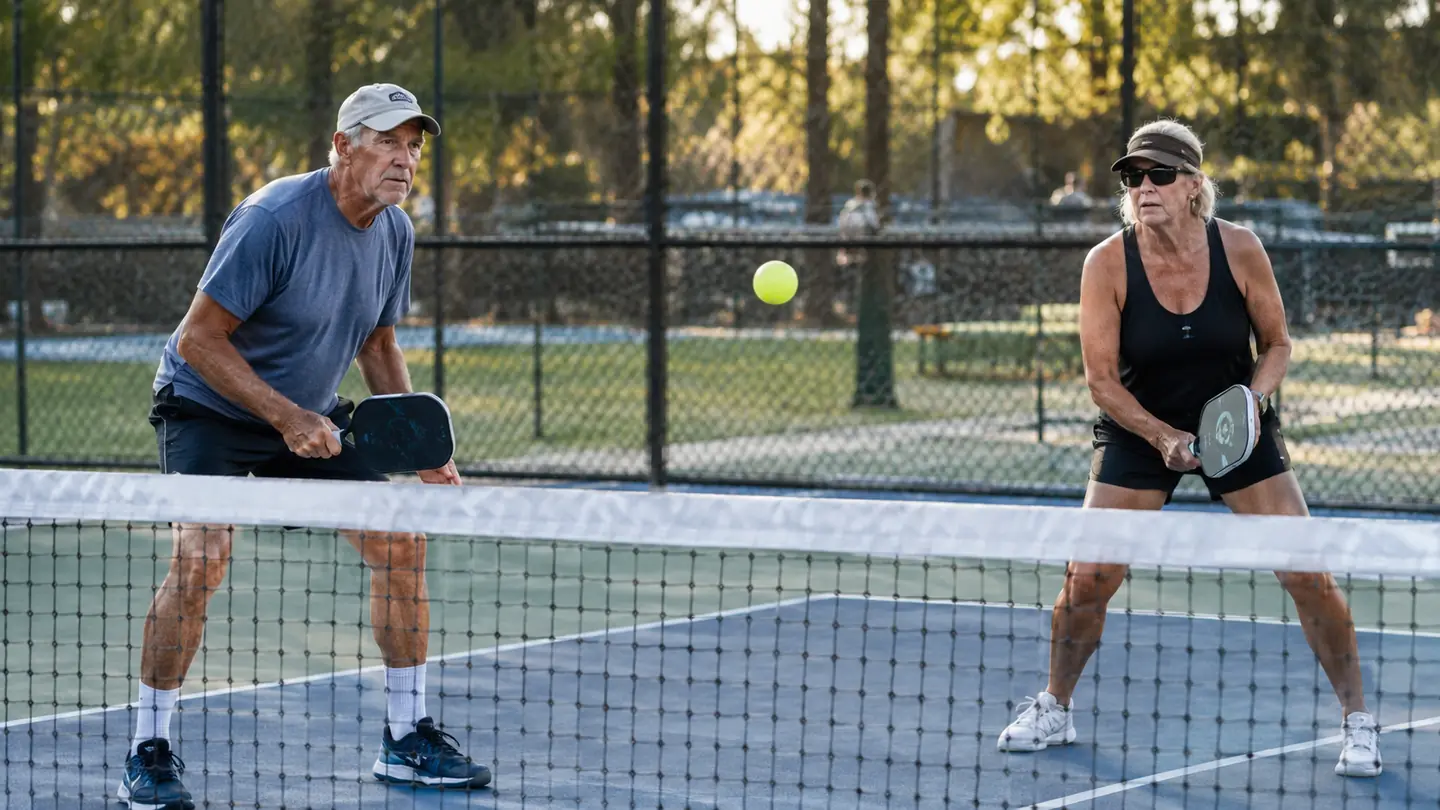
Doubles is half paddle, half positioning. The fastest way to improve is to learn who owns which part of the court, and the simplest version that works at rec level is this: the player closest to the net owns the middle. When you and your partner are both at the baseline, the one who calls the ball takes it. That sounds too simple to be real, but it fixes nine out of ten missed shots between new partners. If you are the one at the line, your job is to cover the quick balls that come back at you, and you have to trust your partner to cover anything deep. Trust is the whole game.
The other thing that matters is talking. Carol and I have played together for years, and we still say mine or yours before almost every middle ball. Nobody gets grumpy about it. Grumpy happens when two people both go for the same ball and one of them eats a paddle. Call it, take it, and if you hesitate on a ball, let your partner have it. In rec doubles, the only truly bad shot is one nobody called.
You will also learn the two big transitions: the serve and the return. On the serve, the server's partner stands at the kitchen line. On the return, the returner's partner stands at the baseline. The goal is to get your whole team up to the line after the return, because the team at the kitchen line controls the point. You do not need footwork drills to learn this. Play three games and watch where the good players stand, then copy them. The fourth ball of the rally is the one that decides most rec points, so watch that one closely.
Step 5: Put the same day on the calendar every week
Rec league is a habit before it is a skill. The people who improve fastest in our league are not the ones with the fastest hands. They are the ones who show up every Tuesday night with their bag packed from the night before. Pick a day, put it in the calendar, and protect it like a dentist appointment that you actually like. The court will always be there. The habit is what makes you a player.
For me, that Thursday open play turned into a Tuesday league night, plus Saturday mornings at the park courts when the weather holds. Carol and I bring the MTEN set out there, and we drill the return, we practice the kitchen line, and we laugh more than we sweat. That is the whole story of sticking with it. Find the version of the game that feels like a good hang, and the skill follows.
Give yourself six weeks before you judge your progress. In six weeks, the serve will feel natural, the kitchen will feel like home turf, and you will know half the names on the rotation board. That is the moment you stop being someone who tried pickleball and start being someone who plays. And here is the part nobody warns you about: you will miss it on the weeks when the weather is bad and the courts are closed. That is how you know it stuck.
What Else Helps
A good pair of court shoes matters more than a fancy paddle. Court shoes with lateral support will save your ankles when you chase a ball that slides wide. Running shoes are better than nothing, but they are built for straight lines, and pickleball is a side to side game. Bring a water bottle and a hat, and if you play outside, sunscreen on the back of your hands. That is a lesson I learned the hard way. And if the community center asks for non marking soles, get them. The custodian will thank you.
If you want to speed things up, watch a little free video content at home. The third shot drop and the kitchen line drills are the two things that explain themselves poorly in words and beautifully on a screen. But do not let watching turn into postponing. You learn more in one hour of open play than in five hours of videos. Pick one video, watch it once, and then go try the one thing it showed you. Repeat that for a month. The court is the teacher.
And one more thing: bring a friend. The whole reason the MTEN set is a two pack is so you do not have to go alone. Drag somebody. It is easier to show up for the first twenty minutes of a new thing when you have a witness, and it is easier to keep showing up when you have a regular teammate waiting for you at the net.
I missed more than I hit that first hour. Six weeks later, I was holding my own at the kitchen line.
Here is the honest version: I spent most of my life thinking sports were for other people. Pickleball is the first one that felt like it had a place for me, because the people in it want you to come back. If you are reading this because you are nervous about a first open play, bring a paddle, say you are new, and give it six weeks. It took me until I was past sixty to learn that it is never too late to be the new person at something, and this game is the easiest place I have found to practice being new.
Start with the set that lets you bring a friend
The MTEN set gives you two USAPA approved fiberglass paddles in one box. Keep one. Hand the other to whoever said maybe. That is how every good doubles partnership I know started.
Amazon Check the MTEN Set on Amazon →