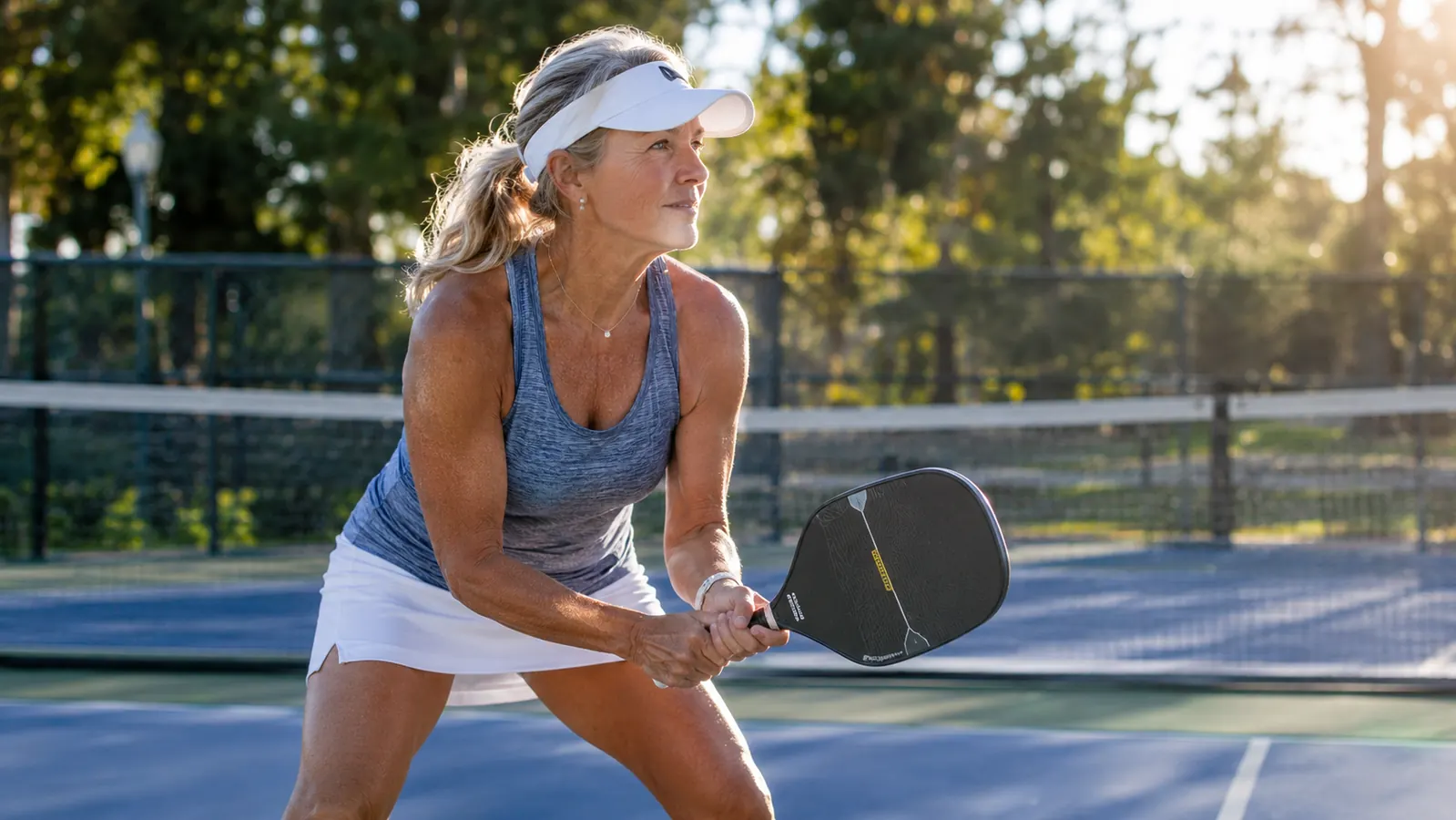
Most reviews of the Jojolemon paddle read like they were typed from a lawn chair during a winning rally. I am not a gear reviewer. I am a 61-year-old retired music teacher in Green Bay, Wisconsin, who started playing pickleball four years ago because a friend dragged me to the community center, and I now play four mornings a week, indoors at the rec center all winter and at the neighborhood park courts from May through October. I play doubles, mostly at the 3.5 level, and I have a touchy right elbow from years of carrying instruments, so paddle weight, grip size, and vibration matter to me more than any marketing claim.
I bought this paddle the way most of us do: my doubles partner Carol would not stop talking about hers. Two months and roughly forty hours of play later, I have opinions the star ratings do not cover. Some of them are the kind you only learn after the return window closes, which is why I am writing them down before the next person hits buy on a 4.8-star average and a pile of glowing one-liners.
The Quick Verdict
A genuinely good carbon paddle for doubles players who want spin and a soft, forgiving feel, once you accept a ten-day break-in and a grip that runs small.
Amazon Check Today's Price →Want the same paddle I play with four mornings a week?
See today's price and fresh buyer photos before your next match.
Amazon Check Today's Price on Amazon →How I've Used It (and What I Didn't Do)
Here is the honest scope of this test. I did not measure spin with a radar gun. I did not lab-test the polymer core. I played doubles at my own level: third-shot drops, dinks at the kitchen line, and the occasional smash when Carol is not poaching. That is the setting that matters for most of us, because most of us are not drilling for tournaments. We are trying not to embarrass ourselves on a Tuesday morning.
The paddle saw two to three sessions a week for about two months across both surfaces. Indoors at the rec center the ball comes through a little faster; outdoors at the park there is wind and, on the good days, October sun. I kept the same grip throughout and never switched gear halfway, because a test you keep changing is a test you can throw out.
I also handed it to three other players for a few rallies: a younger guy who hits everything as hard as he can, a woman my age who never leaves the baseline, and a lefty who dinks like it is a paying job. Their first reactions told me as much as my own two months did. While we are on confessions, two things about how I tested that a man with a radar gun would skip. First, I did almost all of my play in doubles, so the paddle never faced the full-game punishment of singles. Second, I play with the same partner most mornings, so I got consistent feedback on where the ball landed instead of a fresh opponent every point. That is not a lab. It is a life, and it is the life most buyers actually have.
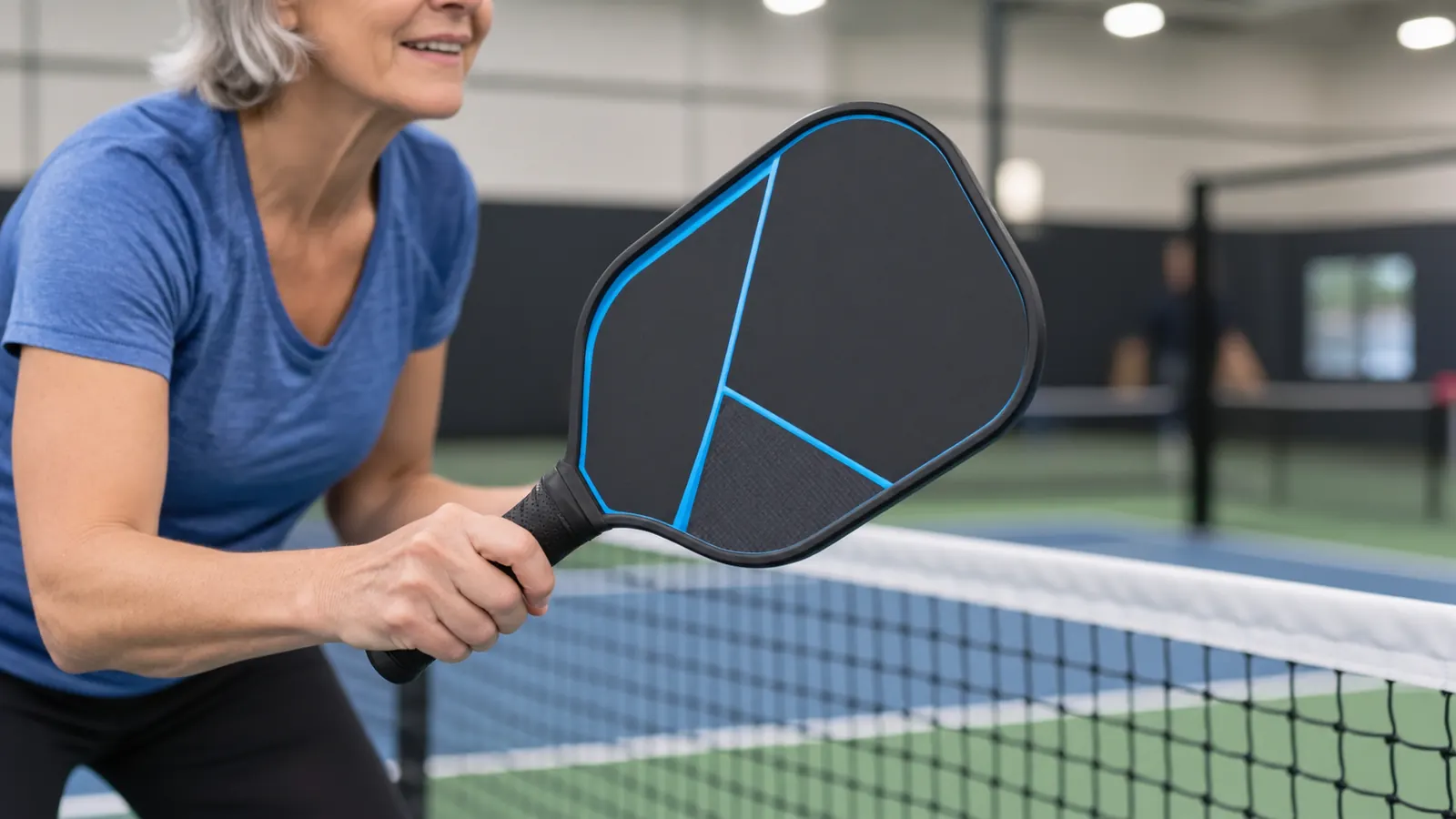
The 16mm Core: Soft, Not Dead
The long version is this: the 16mm Shark Power Polymer Core makes the paddle feel soft at contact. The short version, the one nobody puts in the bullet points, is that soft is not the same as dead. On a clean hit the ball comes off with real pace and a solid thump. When I hit off-center, which I still do plenty, the ball does not die the way it does on a stiff, thin paddle. It floats over the net and gives me an extra breath to recover.
The tradeoff is the honest part. Soft cores give you control and spin, but they ask you to bring the power yourself. My third-shot drops improved within the first week because the face held the ball a beat longer. My drives, though, needed an actual swing, not a paddle stuck out like a tray of snacks. The baseline player in our group liked that. The young power hitter found it too polite.
At the kitchen line is where this paddle earns its keep. The dwell time, that extra moment the ball spends on the face, makes dinks feel like they are on a leash. On a good day I can place a drop within a step of the corner. On a bad day it still lands in the kitchen instead of flying long, and for a doubles player that is worth more than extra pop you rarely get to use.
About the spin claims specifically: I get noticeably more rotation on my serve and my third-shot topspin than I did with my old paddle, but the spin is not automatic. You still have to brush the ball with intent. What the paddle does is reward that brush instead of flattening it, and once the face broke in, the ball grabbed the way the enthusiastic reviews describe. If someone tells you the spin comes free, they are overselling it.
Somewhere around my tenth session my third-shot drops started landing soft again. That was the moment the paddle stopped being a purchase and started being mine.
The Break-In Nobody Mentions
I wish someone had told me about the first ten days. Out of the box the carbon face felt slick. Balls I meant to spin skipped off the face with less rotation than I expected, and my usual reset shots at the kitchen line sailed long. For the first week I wondered whether I had bought a paddle too advanced for me, which is exactly the feeling that makes you reach for the return label.
Then it changed. Around the tenth session the face started gripping the ball the way the ads described. I am not a materials engineer, so I cannot give you the chemistry. I can tell you the slick phase passed, the spin phase arrived, and this matches what several players at the rec center said about their own Jojolemon paddles. Plan for a break-in and you will not panic on day three.
There is a second adjustment nobody mentions. This paddle is quieter than my old fiberglass one, and it took me a few games to trust the feedback. Fiberglass tells you every hit is happening by rattling up your arm. This one delivers a dull thump you feel low in the handle, and the reduced vibration through my right elbow was the biggest reason I kept it. Coming from a louder paddle, though, the quiet can read as no power at first. It is not. It is manners.
Grip, Edge Guard, and Other Fine Print
Now the fine print. The factory grip runs small. I have average-size hands for a woman my age, and by the second game I was squeezing too hard, which is the fastest way to make a touchy elbow worse. I added a thin overgrip in the first week and the difference was immediate. If you have bigger hands or any elbow history, budget for the overgrip before your first session, not after.
The edge guard is another thing the one-liners skip. Mine picked up scuffs and light scratches around the top corners within the first month, which is normal for a paddle that has ever touched a table, a ball cart, or the floor of a rec center parking lot. The guard does its job, protecting the face edge, and I would rather replace a scuffed guard than a cracked core. It does not affect play. It just means the paddle will not stay photo-ready, and if pristine matters to you, now you know.
The face itself scuffs too. Carbon faces do. After two months mine shows a few faint swirls where I drag the ball on spin shots, and no matter how it photographs, it plays the same as the day I took it out of the wrapper. I mention this because the pictures on the product page are dreamy, and the reality of a paddle that actually gets played with looks different.
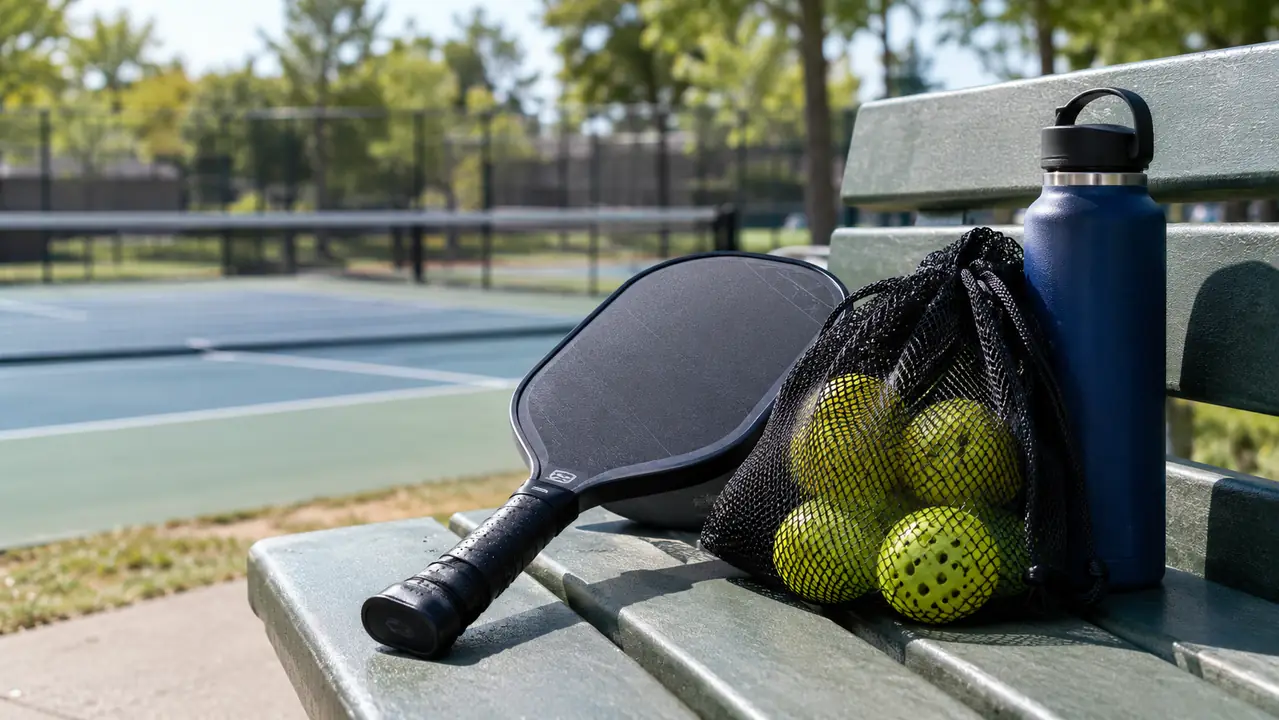
One small note for outdoor players: on humid mornings the factory grip gets slippery faster than I would like, which is another argument for the overgrip. I keep a spare in my mesh bag with the balls, and Carol has started doing the same, which is how you know a fix has turned into a habit at the park.
Indoors vs Outdoors: One Paddle, Two Personalities
The same Jojolemon behaves differently depending on the court, and nobody mentions that either. Indoors at the rec center, where the ball comes through fast and the lighting is flat, the soft core keeps rallies alive. The paddle's forgiveness is what saves me on the quick exchanges at the net. Outdoors at the park, with wind and the heavier outdoor ball, I have to commit to my swing earlier, and the paddle rewards a clean, confident stroke. It is the same tool, but the conditions decide which of its talents shows up.
My advice is to not judge the paddle by a single night indoors. Give it one week of morning sessions and one windy Saturday at the park before you decide how it feels. The players who love this paddle, and the ones who returned it, made up their minds at different courts, and I think that is where a lot of the disagreement in the review section comes from.
Carol played a full session with mine indoors during a cold snap and immediately ordered one, which tells you the indoor test passed. I played her spare on a windy afternoon and understood better why some players complain about a lack of pop. Both of us were right. The paddle is a control instrument, not a cannon, and the court noise decides whether that reads as a feature or a flaw.
Two Months In: What Changed and What Didn't
Two months in, the Jojolemon has settled. The core softened just slightly, which is the direction an honest owner usually wants. The spin I waited a week for has stayed consistent, and my unforced errors at the kitchen line are down because the face no longer surprises me. The grip is still small, which I already fixed. The edge guard still scuffs, which I already accepted.
What has not changed is the weight, and that is a compliment. This is not a featherweight paddle, and it should not be. I played back to back ninety-minute sessions at a Saturday round robin, and my elbow complained less than it did with my old paddle after one casual evening. The balance is neutral enough that I stop noticing the paddle in my hand, which for me is the highest praise a paddle can get.
What changed that I did not expect: my confidence at the net. When you trust the face to hold the ball for that extra half moment, you stop flinching on reset shots. That is the whole honest review in one sentence. The Jojolemon did not fix my footwork and it did not make me a 4.0. It made the shots I already know how to hit come off the face the way I intend them to, and for a 61-year-old doubles player that is the reason I kept it.
Maintenance is simple, which matters when you are retired and tired of anything with a manual. Wipe the face with a damp cloth when the dust from the park courts builds up, let it dry, and grip replacement is a ten-minute job when the overgrip finally goes. Nothing about this paddle needs a weekend of my time, and at my age that counts as a feature.
What I Liked
- Soft, forgiving 16mm core cushions off-center hits
- Real spin once the face breaks in around the tenth session
- Kind to a touchy elbow, impact feels like a thump, not a rattle
- Excellent control at the kitchen line for doubles play
- Holds up to regular play, scuffs are cosmetic
Where It Falls Short
- Factory grip runs small, plan for an overgrip
- First ten days the face feels slick, break-in is real
- Soft core means you supply the power on drives
- Edge guard and face scuff, not a wall-hanger paddle
- Quieter feedback takes a few games to trust
Who This Is For
Get the Jojolemon if you play doubles in the 3.0 to 4.0 range and your game is built on placement instead of power. Get it if you have achy joints and you want a paddle that does not send every vibration up your forearm. Get it if you are tired of popping balls long at the kitchen line and you are willing to give a carbon face ten sessions to wake up. This is a paddle for people who want control to feel like a strength, not a compromise.
Who Should Skip It
Skip it if you are a power player who wants free pace off the face, because the soft core is going to ask you to earn your speed with a full swing. The Selkirk Amped is the paddle I would hand the power hitter in our group, and this is the one I would hand a friend with a sore elbow. Skip it if you cannot stand any break-in period and you want the first hit out of the wrapper to feel like the hundredth. And skip it if you refuse to change a factory grip, because the small grip does not wear in. It just makes you hold on too tight. There are stiffer, lighter, louder paddles that will make a different first impression, and that honesty is part of why I kept this one.
If you have read this far, you already know the honest summary: a lovely control paddle with a real break-in, a small grip, and a scuff tolerance you will need to develop. If that sounds like your game, I think you will be glad you gave it the ten days. Just buy the overgrip at the same time. You can thank me on a Tuesday morning at the park.
Ready to see if the 16mm feel matches your game?
Check today's price on Amazon and read fresh buyer photos from players who just got theirs.
Amazon Check Today's Price on Amazon →