Every court bag I owned before this one had the same failure: either it swallowed my keys like a black hole, or it tipped over and dumped a paddle onto the wet floor of the rec center. I am Barb, a retired music teacher in Green Bay, Wisconsin, and I play pickleball four mornings a week, indoors all winter and outside from May through October. I am a solid 3.5 in doubles, my regular partner is my friend Carol, and I have a touchy right elbow from years of carrying instruments, so I notice gear details like strap comfort and pocket placement more than most players my age. After six months of open play with the Mangrove pickleball bag, I can finally say the daily annoyance is gone.
In four years of playing, I have cycled through three other bags: a gym duffel that organized nothing, a canvas tote that tipped over at least once a week, and a slim backpack whose main zipper gave up in February. The Mangrove bag, with its fence hook and five dedicated pockets, has been my every-morning bag since last fall, and it has quietly changed how I pack, where I hang my gear, and how I feel when I walk off the court. This is the long version of that review.
The Quick Verdict
The best court bag I have owned in four years of pickleball. The fence hook keeps gear dry and off the ground, and the five dedicated pockets mean I never dig for keys, glasses, or balls. It has held up through a Wisconsin winter and a full summer of park courts.
Amazon Check Today's Price →Six months in, this is still the first bag I grab.
The Mangrove pickleball bag hangs on the fence, carries two paddles, a tube of balls, shoes, and a water bottle, and it has held up through roughly a hundred sessions. If you are tired of black-hole duffels and tipping totes, check today's price on Amazon and see what other recreational players say.
Amazon Check Today's Price on Amazon →How I've Used It
My typical morning starts at the rec center while it is still dark. I pack the night before: my main paddle, a spare, one tube of balls, a water bottle, a knee sleeve for my right knee, reading glasses, keys, and my phone. Everything fits in the Mangrove bag with room left over for a light jacket for the days the rec center runs warm. In summer I add a small towel and sunscreen, and the bag still zips closed without a fight.
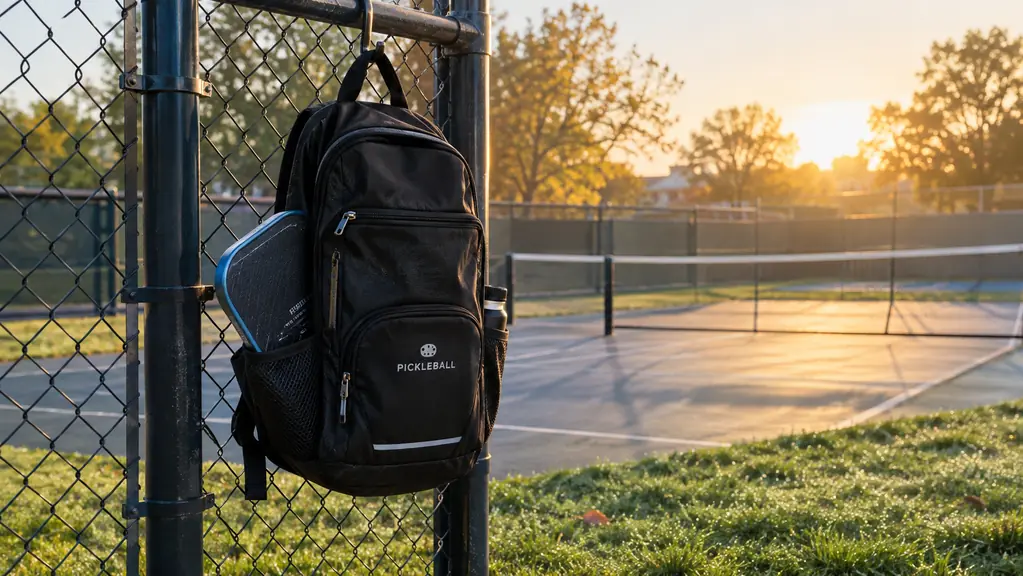
The fence hook is the feature I use every single session. At the park courts, I hang the bag on the fence behind my side of the court, which keeps it off the damp grass and out of the way of feet. Indoors, the rec center has fence panels between the courts, so the same hook works there too. The bag hangs level, the paddles stay in their pockets, and I never have to bend down between games.
I have used this bag roughly a hundred times since last fall. That includes freezing mornings, wet spring days, and the dusty months of summer. If I am honest, I expected the hook to bend or a zipper to stick by now. Neither has happened, and that is the part of this review that surprised me the most.
The bag also rides in the back seat of my car every single day, which means it is always ready when Carol texts me to see if I am playing. That constant presence, more than any single feature, is why I reach for it first.
The Fence Hook Nobody Talks About
The hook is the reason I bought this bag, and it is the reason I would buy it again. It is a sturdy hook on the back panel, and it drops over the top rail of a chain-link fence. Once it is on, the bag stays put, even with a full load. That sounds like a small thing, but it changes the whole flow of open play.
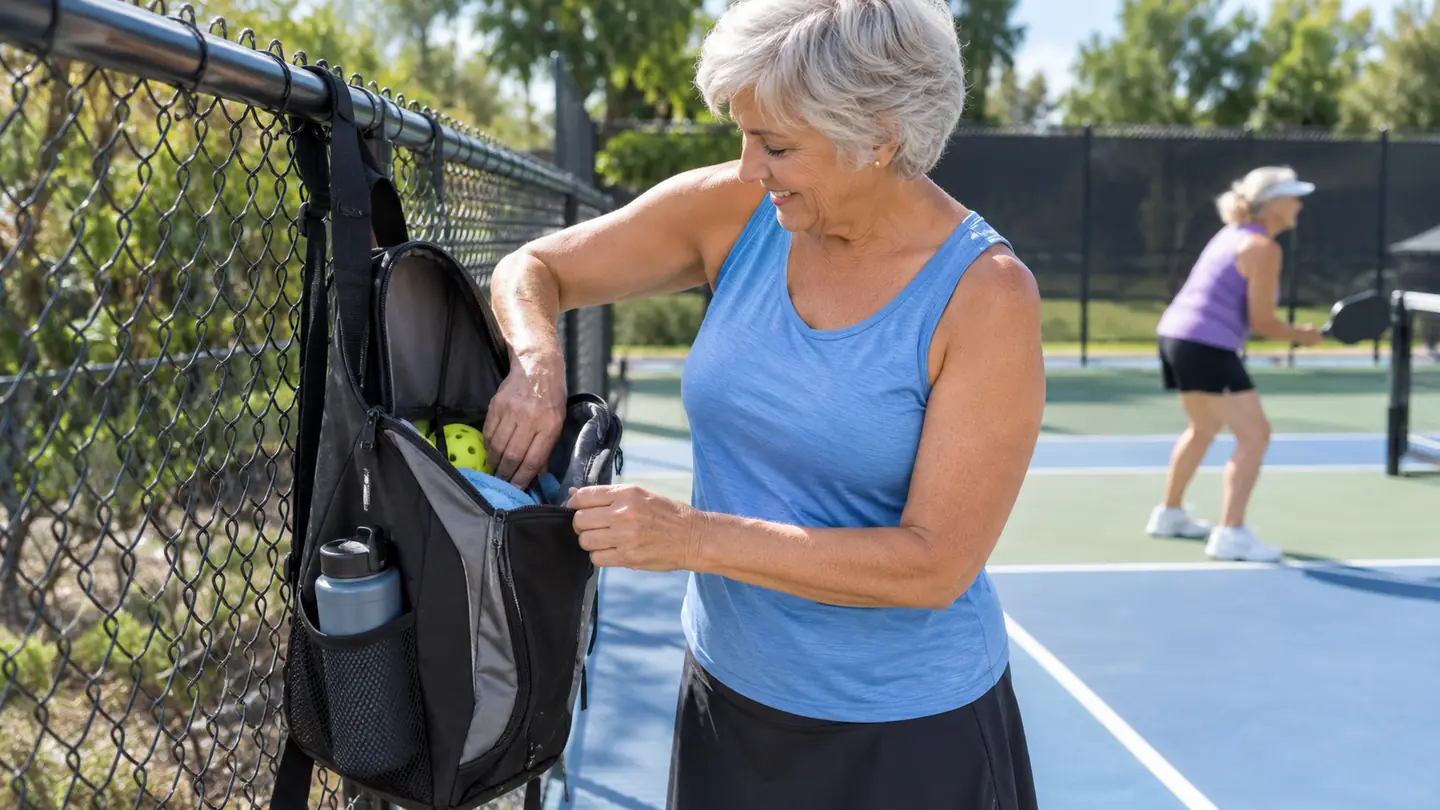
Before this bag, my gear lived on the ground or on a bench. On wet mornings the bottom of my duffel soaked through. On crowded days a bench was a luxury, and my bag ended up in a pile by the door. Now the bag hangs at waist height on the fence, everything stays dry, and I can grab a paddle or a sip of water between games without leaving my spot.
The hook also keeps the bag off the floor of the car, which is where I used to lose small things under the seats. And when the bag is hanging, the main compartment opens toward me. That sounds obvious, but it is not true of every fence-hook bag I have handled. This one opens the right way.
One thing worth knowing: the hook takes about two seconds to learn. You drop it over the rail, give the bag a little tug to make sure it is seated, and that is it. The first time I did it, I stood there and laughed, because I had spent four years bending over to pick my gear up off the floor.
Five Dedicated Pockets, Zero Digging
The five dedicated pockets are what make this bag feel organized instead of just large. There is a paddle pocket that holds two paddles snugly, a shoe pocket that keeps dirty shoes away from everything else, a ball pocket that holds a tube or two, an insulated bottle pocket, and a small valuables pocket for phone, keys, and glasses.
I am a person who loses things inside bags. My old duffel had one giant space, and my sunglasses, keys, and the good balls all lived at the bottom of it. With the Mangrove bag, each thing has a home, and after six months I can pack and unpack by feel. I have not lost a pair of glasses or a ball tube since the first week.
The shoe pocket matters more than I expected. I wear court shoes to the rec center in winter because the drive is short, but in summer I often ride my bike to the park and change there. A separate pocket means the dusty shoes never touch my paddle or my towel. Small thing, real difference.
The valuables pocket is placed on the outside, so I can reach my keys or my phone without unzipping the main compartment. That is the kind of detail you do not notice until you have used the bag for a month, and then you cannot believe every bag does not do it.
How It Holds Up After Six Months
The honest part of any long-term review is what wears out. After roughly a hundred sessions, the zippers still glide, the stitching on the handles is intact, and the hook has not bent or loosened. The fabric shows normal scuffs from hanging on chain link, but there are no tears, no fraying straps, and no broken zipper teeth.
The shoulder strap is padded and wide enough that it does not dig in, which matters to me because of my elbow and my shoulder. I carry the bag from the car to the courts, and at the park the walk from the parking lot is longer than most people expect. It is comfortable over a light jacket in winter and over a t-shirt in summer.
One small honest note: the bag is large, and when it is fully loaded it is heavy. The padded strap helps, but this is not a lightweight sling for a single paddle and a phone. It is a bag for people who carry real gear, and it carries that gear well.
I wipe the bag down with a damp cloth now and then, mostly after the dusty summer months, and the fabric comes clean without any effort. No special care, no complicated instructions. It is a working bag, and it looks like one, in the best sense.
What It Carries, And What It Does Not
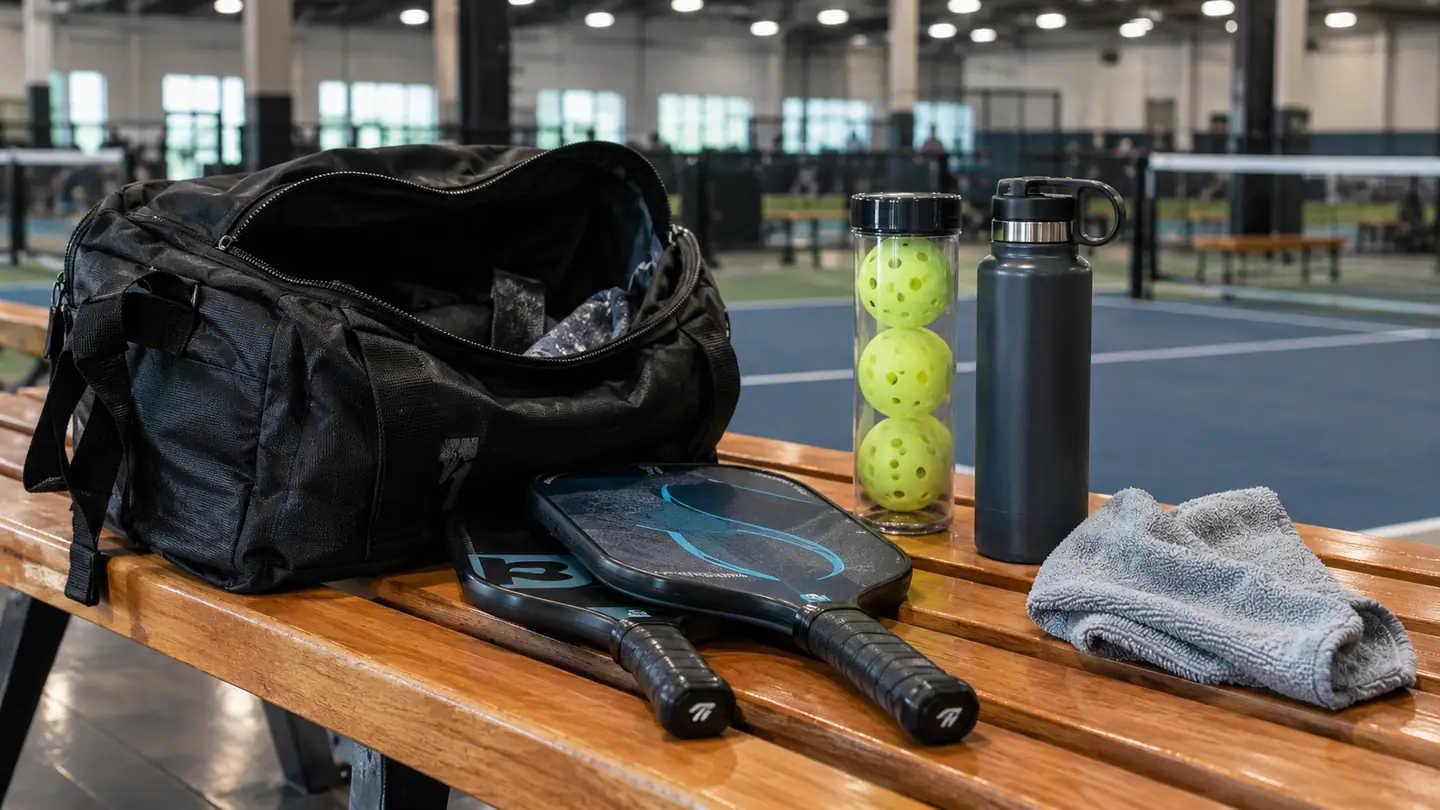
On a typical morning I carry two paddles, one tube of balls, a water bottle, a knee sleeve, reading glasses, keys, my phone, and a small towel. All of it fits, and the main compartment still has room for a light jacket. That is the 'large capacity' part of the name, and it is accurate.
What it does not carry, at least for me, is a laptop or a change of clothes for an office day. The main compartment is deep but not tall, so if you want a bag that doubles as a work bag, this is probably not it. It is a court bag first, and it does not pretend to be anything else.
It also does not have a dedicated cooler section. My water bottle goes in the insulated pocket, and on the mornings I bring a lunch it rides in the main compartment. That is fine for open play, but for a full tournament day I bring a separate small cooler. The bag handles the gear, and the cooler handles the food.
When the bag is fully loaded, I would not want to carry it for miles. But from the car to the court, or from the parking lot to the fence, it is fine. The handle is sturdy, the strap is padded, and the weight sits evenly. For the way most of us actually use a court bag, that is exactly right.
How It Compares to What I Used Before
The two bags I used most before this one were a gym duffel and a canvas tote. The duffel held everything but organized nothing, and the tote fell over constantly, spilling a paddle and a ball tube onto the rec center floor at least once a week. The Mangrove bag fixes both problems by giving every item a pocket and a hook to hang from.
I have also watched players at my courts carry sling bags, and they look great for a quick game. But I am a four-morning-a-week doubles player who brings shoes, a spare paddle, water, and a jacket, and a sling would not hold all of it. The Mangrove bag is the right size for the way I actually play.
If you play once a week with a single paddle and a bottle of water, a bag this size is more than you need. If you are like me, hauling gear four mornings a week, the extra pockets and the fence hook earn their place in your car every single day. That is the difference between a bag you own and a bag you use.
What I Liked
- Fence hook keeps the bag off wet grass and out of foot traffic
- Five dedicated pockets mean I never dig for keys, glasses, or balls
- Holds two paddles, shoes, water, and a jacket without overstuffing
- Zippers and stitching still solid after roughly a hundred sessions
- Padded strap is comfortable for the longer walk from the parking lot
Where It Falls Short
- Fully loaded, it is heavy; this is not a lightweight sling
- Main compartment is deep but not tall, so it does not double as a laptop bag
- No dedicated cooler section for tournament-day lunches
Six months and roughly a hundred sessions in, the zippers still glide and the fence hook has not bent once.
Who This Is For
This bag is for the recreational player who carries real gear. If you play two or more times a week, bring your own paddles and balls, change shoes at the court, and like knowing where your keys are, the Mangrove pickleball bag will fit your mornings the way it fits mine. It is especially good for outdoor players, because the fence hook solves the wet-grass problem that every park court has.
It is also for players who are hard on their gear. I am not gentle with my bags, and this one has taken a Wisconsin winter and a summer of chain-link fences without a single failure. If you want a bag you will not have to replace in a year, this is a strong candidate.
And it is for players who like to know where their stuff is. The dedicated pockets mean my reading glasses are always in the same place, my keys are always in the same place, and my balls are always in the same place. At 61, that kind of consistency is worth more than any fashion statement.
Who Should Skip It
Skip it if you play once a week with one paddle and a single bottle of water. A sling bag or a small tote will do that job with less weight and less bulk. Skip it if you need a bag that goes from the court to the office, because the shape is built for gear, not for a laptop and a change of clothes.
And if you hate carrying weight, be honest with yourself. Fully loaded, this bag is heavy, and no amount of padding changes that. It is a bag for people who need to carry a lot, not for people who want to carry as little as possible.
The bag I still reach for every court morning.
After six months and about a hundred sessions, the Mangrove pickleball bag is the one piece of my gear I never second-guess. If you are tired of black-hole duffels and tipping totes, check today's price on Amazon and see what other players think.
Amazon Check Today's Price on Amazon →