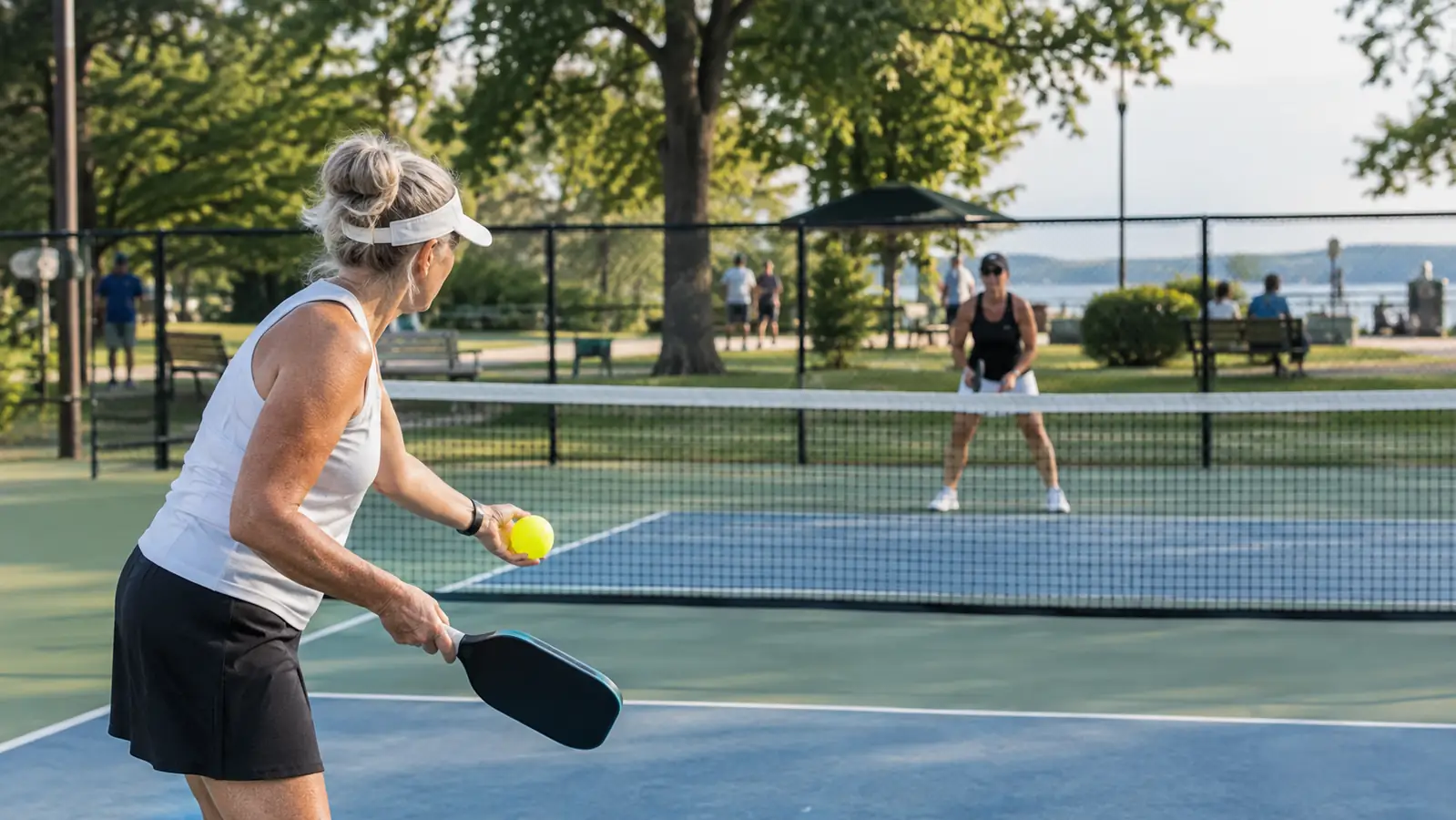
I have carried instruments for thirty-five years, and I have the right elbow to prove it. Mild tennis elbow, the doctor called it, which sounds almost polite until you add pickleball to the mix. Four mornings a week I am on the courts at the Green Bay rec center, and by the third game my elbow starts talking back. So when I finally ordered the Sleeve Stars elbow brace, I did not expect a cure. I expected a strap and a little hope, the same as every other thing I have tried. What I got was more useful than that, and also more complicated than the listing lets on.
The listing shows a tidy strap and big promises. It does not show you where to put it, how tight to pull it, or what to do when it slides down mid-game. Nobody tells you that part, so most of the unhappy reviews are really placement problems wearing a costume. Here is my honest take, in the order I learned it, with the parts the product photos leave out.
The Quick Verdict
A well-made counterforce strap that takes the edge off a common pickleball ache, as long as you place it right and keep your expectations honest.
Amazon Check Today's Price →A Pair of Straps That Earned a Permanent Spot in My Bag
After four months of doubles, the Sleeve Stars brace is the first thing I pack. It does not fix my elbow. It makes the games possible. Check today's price on Amazon and see the full story below.
Amazon Check Today's Price on Amazon →How I've Used It
I came to pickleball late, like a lot of us. A friend dragged me to the community center four years ago, and I was hooked by the end of the night. The court is my coffee break and my church, all in one. I am a solid 3.5 on a good day. I mostly play doubles, and I play four mornings a week, indoors at the rec center in the winter and outdoors at the park courts from May to October. My regular partner Carol will tell you that I am competitive about exactly one thing, and that one thing is not my serve.
The elbow started complaining about two years in. Decades of carrying instrument cases had already given me a touchy spot, and the overheads and the long dinking rallies just kept poking it. I will spare you the anatomy lesson, but the short version is that the tendon gets irritated where it attaches, and every pickleball swing tugs on it. I tried a compression wrap. I tried ice. I tried a week off, which worked best of all, but I did not want to take a week off every month. I have already switched to a lighter paddle and a softer grip, because weight and vibration matter more to me than they used to. That is the real reason I went looking for a strap in the first place. I wanted to play, and I wanted my elbow to stop negotiating with me about it.
The Sleeve Stars brace comes as a pair, which matters more than it sounds. One lives in my pickleball bag. The other stays on the bathroom counter for the mornings when my elbow is grumpy before breakfast. I put the strap on about ten minutes before warm-up, and I take it off after the last game even if the ache has quieted, because wearing it all day has never helped anybody.
What Nobody Tells You Before You Order
First, the sizing is not a suggestion. The listing says the strap fits arms from 9 to 23 inches, which covers most forearms and then some. That range means you have to actually read the measuring directions and place the strap at the widest part of your forearm before you pull it tight. My first try I put it on loose, over a sweatshirt, and it spun around like a hula hoop. That was my fault, not the brace's.
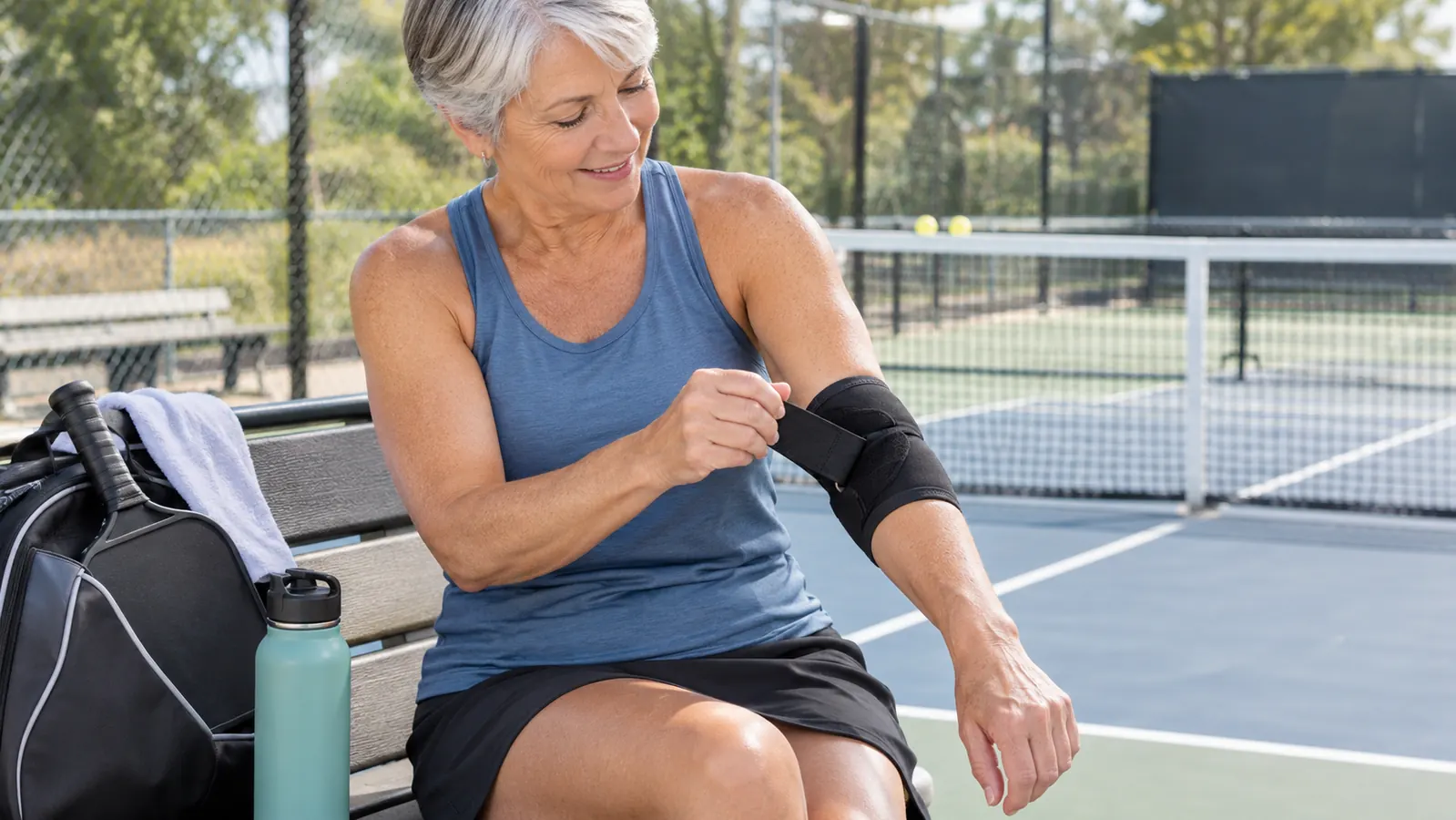
Second, placement is everything. This is a counterforce strap, not a cushion. It works by wrapping the forearm just below the elbow, where the tendon that anchors the forearm muscles runs, and it changes the angle of pull every time you grip the paddle. The usual guidance is two or three finger-widths below the point of the elbow. On me, the sweet spot is about the size of a wristwatch. Put it there and the ache fades by the second game. Miss by an inch and you are just wearing an armband for decoration.
Third, and this is the part the reviews do not shout about: the strap does not heal the tendon. It changes the angle of pull so the sore spot gets a break while you play. That is genuinely useful, but it is not a cure. I have watched players treat a strap like a warranty, and they are usually the ones who end up disappointed. Think of it as a teammate that takes some of the load, not a doctor that makes the problem disappear.
Fourth, sweat is a real factor. Pickleball in July in Wisconsin is humid, and four games in, the strap is damp. The velcro holds fine once it dries, but if you ball the brace up in your bag overnight, it will smell like the inside of a gym bag. Hang it up to dry and wash it by hand now and then in cool water. The instructions say air dry, and they mean it. I put one in the dryer once and the edge curled like a potato chip. A dry strap is a happy strap, and that has become my whole philosophy.
How to Put It On So It Works the First Time
The instructions that come with the Sleeve Stars brace are politely useless, the kind that assume you already know what a counterforce strap is and why it exists. So let me save you my first week of fumbling. Start with a dry forearm, not one slick with sunscreen or lotion. Set the strap flat against the skin, two or three finger-widths below the point of the elbow, on the thickest part of the forearm muscle, then wrap it around and pull until it is snug.
Then snug it one more pull. Not tight enough to leave a dent in your arm, just enough that it does not move when you swing. The mistake everyone makes is the opposite one: they thread it on loosely so it feels comfortable, and then it slides down to the wrist by the second game. A counterforce strap that has moved is doing nothing. Re-tighten it at every water break, and you will get more out of it than any feature on the package. The first time you get it right, you will know it, because you will forget it is there, and that is the whole point.
I also learned to take it off during long rests. If you sit out for a set and a half, the strap keeps squeezing a muscle that is not working. Loosen it, let the blood move, and put it back before you return to the line. It sounds like fussing, but it is the difference between a strap that helps and a strap that just annoys you.
How It Held Up Over Four Months
I have worn the Sleeve Stars brace since late spring, which means outdoor courts, a stretch of hundred-degree days in July, and a tournament weekend where I played more pickleball in a week than I had in any seven-day stretch since I started. Four months in, the velcro still grabs, the stitching is tight, and the pair I wear now has been hand-washed and air-dried the whole time. It still looks like it did the day it arrived. I am careful with them, the way you are careful with anything that keeps you playing.
The honest weak point is the stretch. After back-to-back games the strap loosens a little until it rests, and that is true of every strap I have owned. What I like about this one is that the velcro patch is big enough to work around it. I can re-cinch mid-game without fiddling with the end, which means I actually do it instead of playing the rest of the match with a sloppy strap.
The backup matters more than I expected. The second brace saved me twice, once when the first one was drying after the tournament and once when I left my bag in the car overnight and everything in it was damp by morning. Knowing there is a twin on the bathroom counter means I never skip a morning of pickleball because my gear betrayed me.
What I Liked
- Comes as a pair, so one is always dry and ready
- Big velcro patch makes mid-game re-cinching easy
- Wide enough to stay put through a long doubles session
- Simple to hand wash and air dry
Where It Falls Short
- Only helps if you place it exactly right, and the listing does not show you how
- Does not heal the tendon, just takes the edge off while you play
- Can slide and bunch on very narrow forearms
- Looks like sporting goods, not a fashion choice
Placement is everything. Get it right and the ache fades by the second game. Get it wrong and you are just wearing an armband.
The Tradeoffs Worth Knowing
Here is where I get honest about the things the listing would rather I skip. The brace is not pretty. It is a strap and a logo, and it does not blend into a summer outfit. You will look like a person who owns a strap, because you do. That bothered me for about a week, and then I stopped noticing, because the ache stopped reminding me.
It can also be finicky on smaller arms. The 9-inch minimum covers me fine, but I have watched players with very narrow forearms fight the strap all morning. It slides, it bunches, and no amount of tightening fixes it, because the problem is that the strap is wider than their forearm. If that is you, a narrower single strap might sit flatter. The trade-off is you only own one, so you are back to hoping it dries in time.
I compared this pair against a single-strap brace from another brand before I settled. The other strap was built fine, and it won in two ways. It was easier to place, because there was less material to fiddle with, and it sat flatter on smaller arms. But it was one strap, not a pair. When it was damp or lost or in the wash, I had nothing. The Sleeve Stars pair means I always have one dry and ready, and for a player like me who is on the court four mornings a week, that is the tiebreaker. The single strap is a little easier to place because there is less material to wrestle, and for some players that alone is worth it. If you want the full version of that match-up, the head-to-head article has it.
Who This Is For
This brace is for the recreational player with a grumpy elbow who still wants four mornings a week on the court. It is for the 40-to-70 crowd, which is most of us, who got a touchy joint somewhere along the way and would rather play through it than sit out. If your elbow only complains during play and settles down by bedtime, a strap like this is a reasonable first tool. If it wakes you up at night, start with the doctor instead. But if your arm is just sore after a long weekend of doubles, this pair is a sensible, honest place to start.
Who Should Skip It
Skip the Sleeve Stars brace if your elbow hurts at rest, or if it is swollen, bruised, or hot to the touch. A strap is not a doctor. Skip it if the ache shoots down into your wrist or fingers, because that is nerve territory and no amount of velcro fixes a nerve. And definitely skip it if you are hoping to play through a real injury, because it will let you, and then you will be sorry you did. For a mild, game-related ache with none of those red flags, it is a reasonable first step. Beyond that, go see a professional before you buy anything.
The Honest Bottom Line
Here is the whole truth. The Sleeve Stars elbow brace will not cure your arm. Anyone who tells you otherwise is selling something. But for a mild case of tennis elbow that flares during pickleball, it is the most useful little piece of gear I own. I have one strap in my bag and one on the bathroom counter, and it lets me play my four mornings a week. That is exactly what I asked it to do.
If you want more, the long-term review on this site goes deeper into the durability side of this brace. There is also a head-to-head between the Sleeve Stars and a single-strap brace, because that was the choice I had to make. And if you are still deciding whether any strap belongs in your pickleball bag, the ten reasons list is a good, honest place to start. None of these are hype. I read a lot of the reviews before I bought, and the pattern is clear: the people who hate it either wore it wrong or expected it to heal them. I do not do hype. I just play pickleball, and I want my elbow along for the ride.
One Pair for Your Bag, One for the Bathroom Counter
After four months of doubles, the Sleeve Stars brace is the first thing I pack, and the honest truth is it does not fix my elbow, it just lets me play. For a mild, game-related ache with no red flags, it has earned its spot in my bag and on my counter. Check today's price on Amazon.
Amazon Check Today's Price on Amazon →