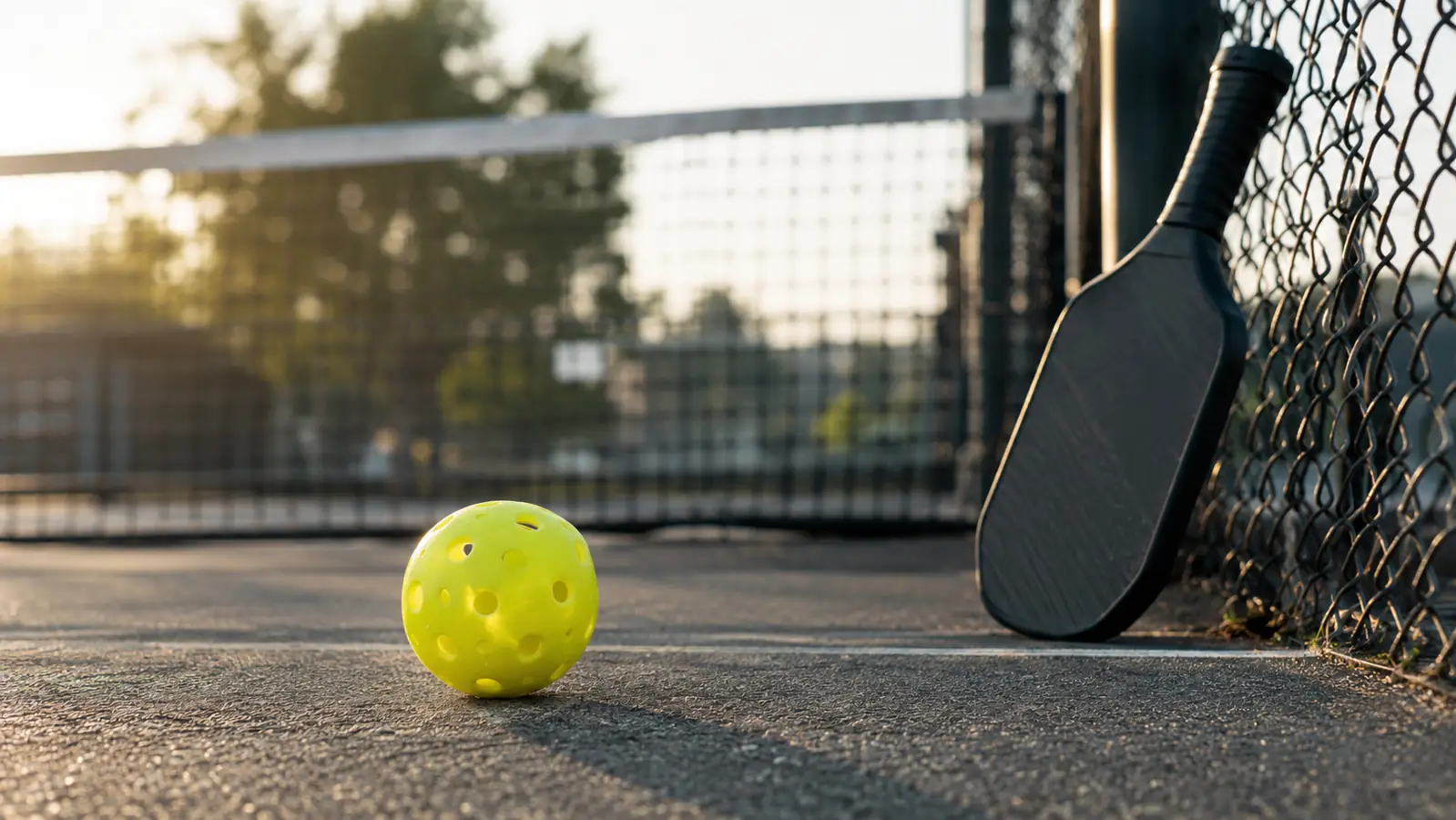
Four years ago, my friend Carol dragged me to the community center and handed me a paddle like it was a life raft. I was 57, my right elbow already complained about a lifetime of carrying instruments, and I figured pickleball would be a pleasant way to get some exercise before I went back to my quiet retired routine. Instead I got hooked. Now I play four mornings a week, outside from May through October on the park courts, and somewhere along the way I became the woman on the bench who has opinions about balls. For the last full season, the ball in my bag has been the Franklin X-40, and here is what a year of honest play taught me about it.
But before I get into the details, a quick word about who this review is for. I am not a tournament player and I never will be, and that is not false modesty, it is arithmetic. I play for the point, the gossip between games, and the pleasure of watching a 72-year-old neighbor run down a drop shot she has absolutely no business reaching. If you play like that, my season with the X-40 is your season.
The Quick Verdict
The Franklin X-40 is the outdoor ball I'd put in front of any recreational player after a full season of park-court doubles: it bounces true from the first game to the last, survives the summer, and only shows its age in ways you barely notice.
Amazon Check Today's Price →Skip the cracked-ball roulette. This is the ball I keep in my bag.
The Franklin X-40 is the outdoor ball most park courts end up with, and a full season of use backs up the reputation. Check today's price and grab a sleeve before your next game.
Amazon Check Today's Price on Amazon →How I've Used It
The neighborhood park courts have asphalt that has seen better days, with cracks, a few pebbles, and a fence missing a panel in the corner. Since last May, I have played there four mornings a week, two hours a session, mostly doubles with Carol and whoever else shows up with a paddle. We rotate a sleeve of three Franklin X-40s through every game, pulling out the beat-up one the moment it starts to wobble.
That is the part most short-term reviews miss. A ball is not good or bad on day one, because every new ball looks great on day one. What separates a ball you would buy again is how it behaves in week twelve, after hundreds of rallies, a few rain scares, and a summer of baking in a gear bag between games.
I kept a mental log instead of a lab notebook, because this is a park court, not a testing facility. I paid attention to when the balls started clicking differently off my paddle, when they flew short in the wind, and when the surface finally got rough enough that I gave up and pulled a fresh one from the sleeve.
What You're Actually Getting
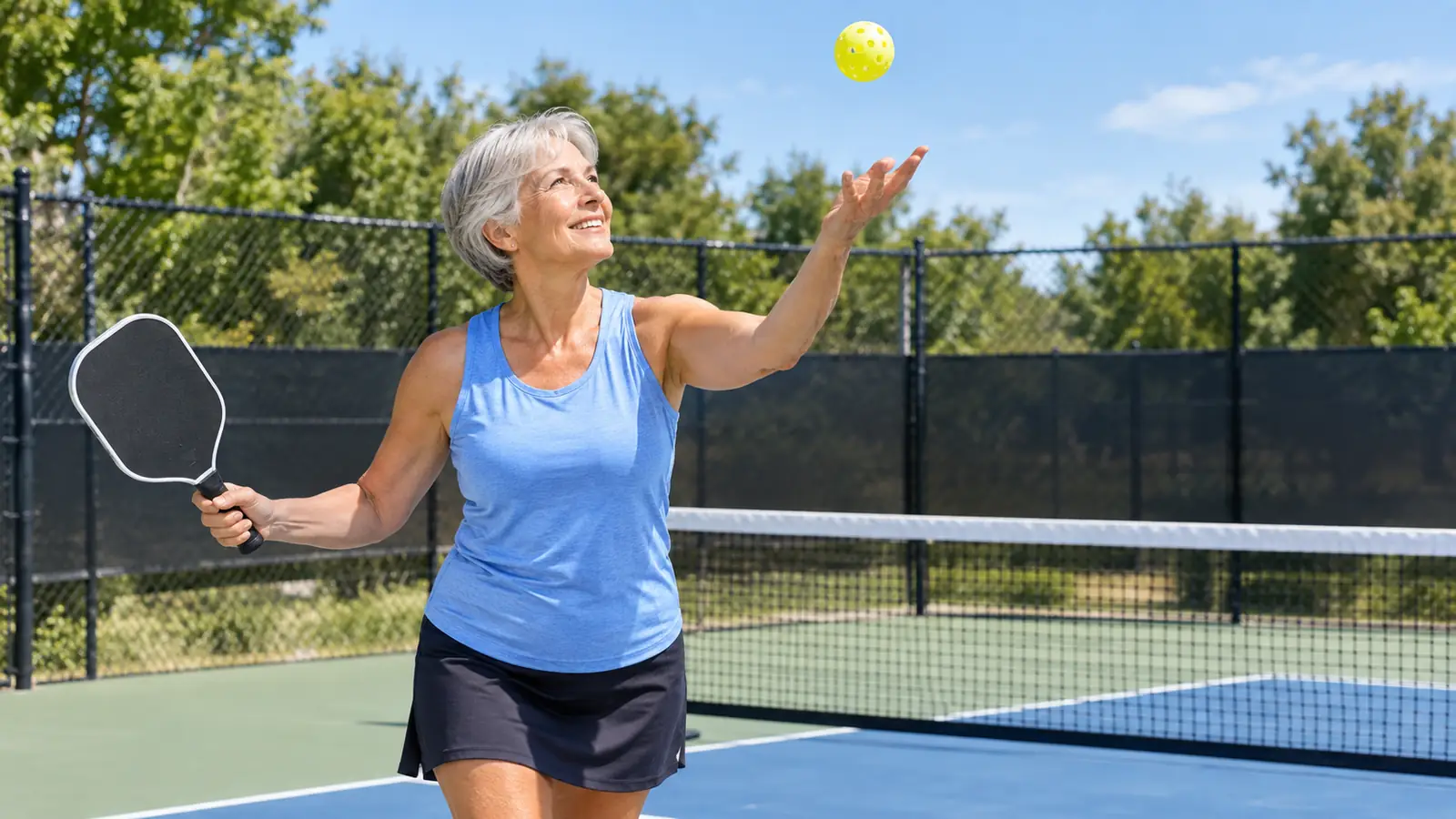
A Franklin X-40 is a 40-hole outdoor ball, and the count is the whole story. Indoor balls have fewer holes and a softer shell so they play gently on gym floors. Outdoors you need the harder plastic and the extra holes to hold a truer arc, and the X-40's holes are precision-drilled rather than punched. Punched holes leave rough edges that catch the paddle face and make a serve unpredictable. Drilled holes stay smooth and clean, which is why an X-40 still feels crisp after months of use.
It is also USAP approved for tournament play, which matters less to me than you might think. I am never going to a national championship. What the approval tells me is that the ball meets a consistent standard for size, weight, and bounce, and consistency is exactly what a doubles game on a cracked court needs. It is the same 2.87-inch diameter and 0.78-ounce weight as every other approved ball on the shelf, so the switch between a Franklin and another tournament ball is seamless when a rally sends ours under the fence.
On the feel side, the X-40 rewards a soft touch at the kitchen line in a way I did not expect. Dinks off the face stay low and true, and the ball does not jump off the paddle when you are trying to be gentle. That matters more to me than it used to, because my touchy right elbow means I play a softer game than I did at 55, and a ball that respects a soft shot is worth something.
The quality control shows in the consistency between balls. Some brands give you a sleeve where one ball seems livelier than the others, and you end up arguing at the kitchen line about which ball to play with. I have never had that argument with an X-40. The three balls in a fresh sleeve all play the same, which sounds like a small thing until you lose a close game to a ball with a mind of its own.
Bounce, Wear, and the Long Game
The classic test for any pickleball is the drop test: hold it at shoulder height, let it go on the hard court, and see where it comes back to. A fresh X-40 bounces back to about your hip, every time. Halfway through the season, the same test still passed. That is the part that surprised me, because I expected the ball to give up its bounce long before the shell showed any damage.
Cracking is the other test, and here the X-40 earns its reputation. We cracked exactly two balls over the entire season. One was run over by a bicycle on the path beside the court, which is not the ball's fault, and the other developed a hairline seam after a month of hard play and then kept going for two more weeks before I retired it. Compare that to the house-brand balls the rec center keeps in a bin by the door. Those crack on a cold morning hit more often than not, and one hard smash in the first game is usually enough to put one out of its misery.
The cracked seam was worth studying, actually. When an X-40 finally goes, it does not explode into pieces or turn into an oval, it develops a small crack like a smile opening at the seam, and it starts to sing a flat note off the paddle for a few games before you notice the visual damage. That gradual failure is a feature, because it never costs you a point suddenly.
What actually wears out is not the shell, it is the pop. By October, the ball that left my paddle with a crack in May comes off a little dull and a little soft, like it has had a long season of its own. It still bounces the way a pickleball should, and in a rec game you would never notice. But I notice, because I have spent four years hitting the same serve, and I can hear the difference in the click.
Wind, Heat, and Other Outdoor Reality Checks
Outdoor pickleball has one enemy no ball can fully beat, and it is the wind. The X-40 is a heavier outdoor ball, which is precisely what you want on a breezy morning. It does not sail the way the lighter indoor balls do. I have watched an indoor ball do a full disappearing act on a serve in a crosswind, drifting halfway to the fence. The X-40 just drifts a little, and a little drift you can adjust for.
Heat is where the X-40 shows its other personality. Leave a sleeve in the car on a July afternoon and the balls come out soft and wobbly, flattening on impact instead of springing back. Ten minutes of play usually fixes them, or twenty minutes in the shade while Carol and I stretch and argue about the score. It is not a flaw in the ball, it is the physics of any plastic ball left baking in a car, but it is worth knowing before you pack your bag the night before a morning game.
Cold is a smaller problem. On the sharp October mornings when we play until our breath shows, the X-40 gets a little harder and a little more lively, which is the opposite of what you want when the ball is already moving fast. It is manageable, but if you are the ball keeper, you learn to warm a sleeve in your pocket between games on those days.
The Other Balls in the Bin
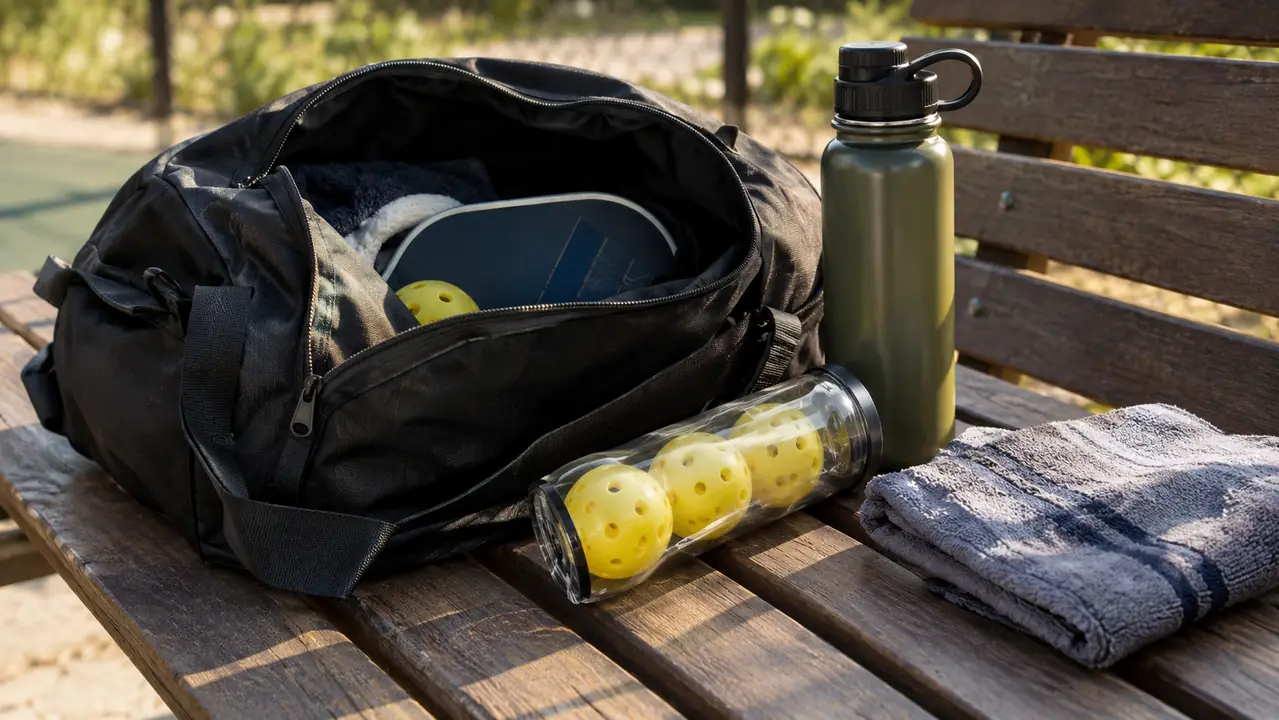
The rec center keeps a bin of assorted balls by the door, and on slow mornings I have played with most of them. The house-brand balls are fine for the first game and then they crack, usually right when the morning gets good. The name-brand outdoor balls from a couple of other companies are solid too, and on a good day I cannot tell the difference between them and the X-40. The difference shows up in the long run, which is exactly the thing a weekend review never covers.
Here is the unscientific thing that convinced me. When a stranger walks up to a full court and asks if anyone has a spare ball, the ball they are hoping to be offered is an X-40. Every time someone pulls one out of a bag, the whole court nods. That reputation was not built by a marketing campaign nearly as much as by a decade of park courts, where the X-40 is the ball that survives, that bounces, and that nobody argues about.
I will be honest about the limits of my reporting here. I am a 3.5 doubles player with a touchy elbow, not a lab. I did not measure bounce heights with a ruler or log temperatures in a notebook. I played four mornings a week for six months and paid attention, which is a reasonable review method for the people who will read this, because the people who will read this are probably playing on the same kind of cracked asphalt.
What I Liked
- Bounces true from the first game of the season to the last
- Survives park-court abuse with rare cracking
- Holds a steady arc in the wind for an outdoor ball
- Precision-drilled holes stay smooth, so it keeps its crisp click
- The ball everyone recognizes, which matters on a community court
Where It Falls Short
- Loses its sharp pop after several months of hard play
- Gets soft and wobbly if left in a hot car
- Plays fast and lively on cold fall mornings
- Costs more than the house-brand balls in the rec center bin
The X-40 is the ball I reach for when the game actually matters, and it is the ball I hand to a stranger who needs one. Around here, those turn out to be the same ball.
Who This Is For
For recreational outdoor players, the X-40 is the easy answer. If you are a 3.0 or 3.5 doubles player like me, you do not need your ball to be exotic, you need it to be predictable, durable, and easy to find when it skips through the missing fence panel. The X-40 is also the right pick if you are the de facto ball keeper on your court, the person whose bag is the community bag, because everyone recognizes the sleeve and everyone plays a consistent game with it.
If you are new to the game, this is also a sensible first set of outdoor balls. Learning on the ball that most of your league will use means you are not adapting to a new ball every time you step on a different court, and the durability means you will not be buying replacements mid-summer.
Who Should Skip It
If you play indoors, skip the X-40. It is built for outdoor courts, and on a gym floor it plays hard and fast, bouncing higher than the softer indoor balls the rec center brings out in winter. It is also not the ball for you if you play a handful of times a summer and any ball that bounces is good enough. And if you are competing at a level where every bit of ball feel decides a point, you will probably want to experiment with the premium tournament balls. For the rest of us, the ones playing for the rally and the conversation afterward, the X-40 is the ball that keeps showing up.
One more honest note on the skipping. If you are the kind of player who likes to buy a different ball every season to see what is out there, the X-40 might feel too familiar and too safe. It is not an experimental ball. It is the reliable one, and reliable is a feature, but only if you actually want reliable. And if you are a 4.5 or 5.0 who plays serious tournaments, you already have your own opinions about balls, and none of them need my help.
Stock your bag with the ball the whole court agrees on.
After a full season of park-court doubles, the Franklin X-40 is the ball I keep buying. Check today's price on Amazon and bring the good balls to your next game.
Amazon Check Today's Price on Amazon →