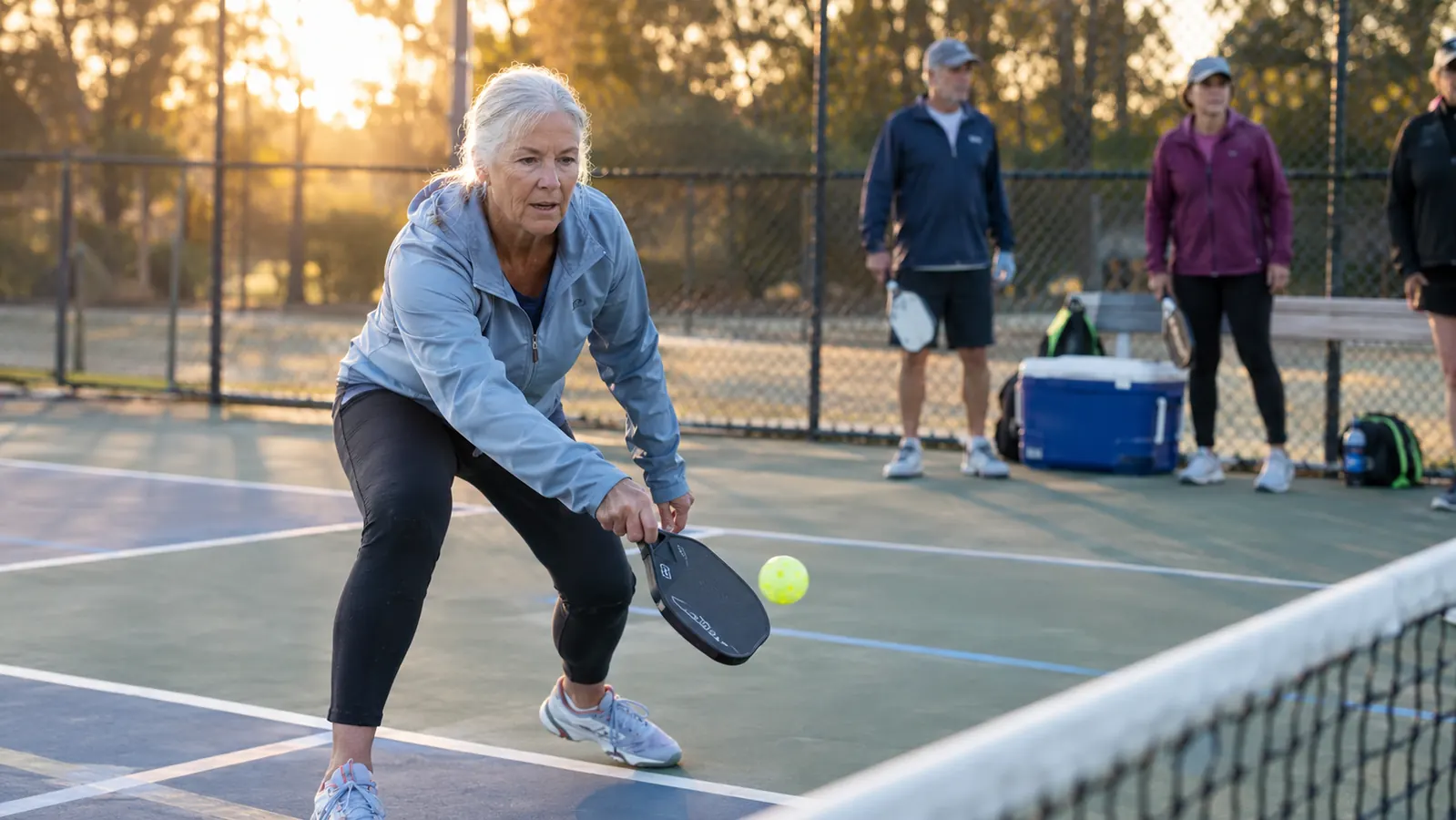
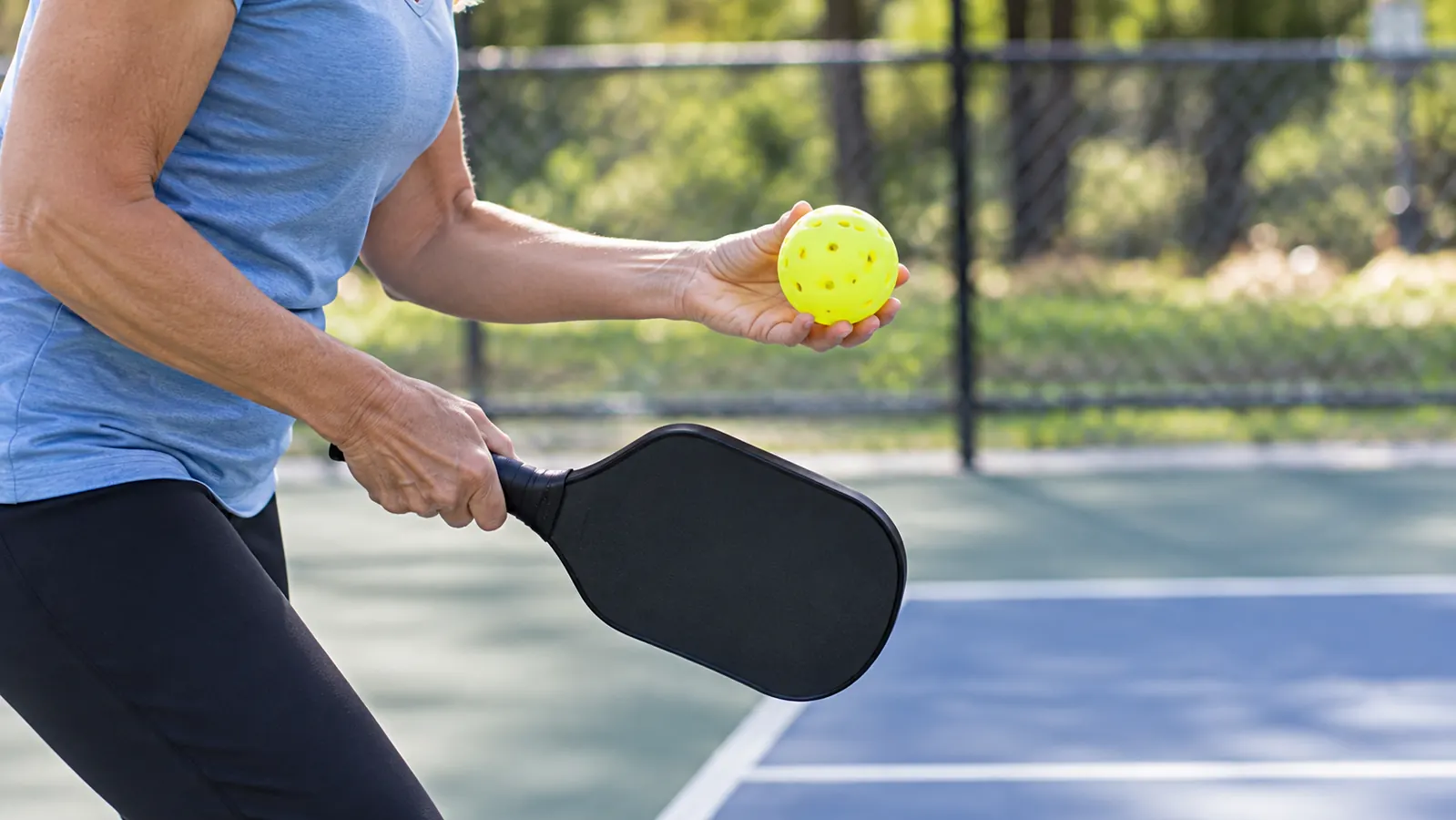
Every April, the Tuesday-morning group at our park starts the same argument, right next to the cooler somebody always brings. Someone digs last season's bag of balls out of the trunk, holds one up to the light like a jeweler, and announces we need a fresh case before the courts thaw for good. Then Carol, who has been my doubles partner for four years, asks the question she knows will get me talking: Franklin X-40 or Selkirk Pro S1? I am the one who usually ends up placing the order, so I have spent three full seasons playing both, sometimes side by side on the same court just for the fun of it. The honest answer is that both are good balls, and anyone who tells you one is a dud is selling something. But for a group that plays four mornings a week and wants the ball to bounce the same on Thursday as it did on Tuesday, the Franklin X-40 is the one I keep coming back to.
If you want the short version before I ramble on: buy the Franklin X-40 when your group plays in decent weather, likes a crisp and predictable bounce, and buys in bulk so nobody guards their last good ball like it is gold. Keep the Selkirk Pro S1 in mind if half your season happens below 50 degrees, or if you have an elbow like mine that flinches at a hard ball off a cold paddle. And know this up front: neither ball is going to make you a better player, and it is not going to fix your third-shot drop. They just need to bounce the same way twice in a row. Almost every straight comparison between the two ends with a shrug, because both are proven balls with real followings. The X-40 simply fits more of our mornings here in Green Bay, and that is the whole story in one paragraph.
| Franklin X-40 | Selkirk Pro S1 | |
|---|---|---|
| Price per ball | Usually the cheaper option per ball when you buy the 12-pack | Premium tier too, but the per-ball cost tends to run a little higher |
| Bounce consistency | Tournament-standard bounce that stays true after dozens of games | Slightly softer bounce that gets a little less uniform as it wears |
| Warm-weather durability | Holds up through a whole summer of four-morning-a-week doubles | Durable too, but it is not where the S1 shines |
| Cold-weather play | Gets brittle below about 50 degrees and cracks sooner | Stays pliable in the cold and survives freezing mornings far better |
| Feel at impact | Firmer, crisper hit off the paddle face | Softer, quieter contact that is easier on achy elbows |
| Spin | Good spin early, then the surface smooths out | Slightly textured surface keeps its grip longer |
| Group-buy packs | 12-pack is the classic league and clinic staple | Usually sold in smaller counts, better for trying one first |
| USAP approval | USAP approved | USAP approved |
| Warranty | No warranty on a consumable, standard for the sport | Same, no warranty on a consumable |
Where Franklin Wins
Start with the bounce, because that is what a group actually notices first. The X-40 is the ball you see at tournaments for a reason. Drop two fresh ones on the same court and they hop to nearly the same height, game after game, and that predictability is how you tell whether your third-shot drop is improving or whether the ball simply did something weird. I play four mornings a week, most of it doubles, so I am not looking for excitement out of a ball. I am looking for the same hop at 7:15 in the morning that I got at 7:15 the day before. The Selkirk bounces pleasantly and softly, I will give it that, but it drifts a little more as the ball picks up miles, and a drifting bounce is the last thing I want when we are all groggy and reaching for coffee between games. Over a whole season, the X-40 holds its shape and its hop longer than the S1 does on our hard park courts. That consistency matters more than any other single quality, because our group is at the age where we are all trying to improve, not outrun the equipment, and you cannot tell if you are improving when the ball is the one changing its mind.
Then there is the group-buy math, and I am a retired music teacher, so let me do it the way I would explain it to a third grader. When you need enough balls for two courts of doubles, you want a 12-pack, and the Franklin X-40 is exactly the ball leagues order in that size. Four of us split a case every May, each of us gets three new balls, and that bag carries us through October. I have watched those same X-40s survive hard courts, chain-link fences, and the occasional enthusiastic dog that snatches one off the sideline, and they still bounce well enough for a Tuesday scrimmage. Compare that to the Selkirk, which you usually buy in smaller counts that sit halfway between a trial pack and a team order. Nothing wrong with that, but it means the per-ball cost floats higher when you are stocking two courts at once. For warm-weather outdoor play there is nothing exciting about the X-40, and that is precisely why I like it. A ball that is going to get smacked into a fence and rained on should be boring and affordable. I wrote up my full-season notes in a separate long-term review of the X-40 if you want the tedious details with dates and game counts.
One specific memory sells me on these balls every time. Last August we had a windier-than-usual Tuesday, the kind where every lob drifts toward the fence, and Carol and I went through three X-40s in a morning because they kept getting smacked out of the park. We fished all three out of the weeds, dusted them off, and they finished the session with no crack and no wobble. A softer ball would have bruised or split on that fence line. I do not ask for much from a consumable, but surviving contact with a chain-link fence without changing shape is the whole job, and the X-40 does it quietly.
Where Selkirk Wins
I will hand the Selkirk Pro S1 its biggest win without a fight: cold weather. Green Bay mornings in May and September can fool you, and a ball that feels great in July turns into a different animal at 48 degrees. The X-40 gets stiff and, honestly, brittle when it is chilly, and one hard hit can crack it fast. I have lost X-40s that way on cool mornings, and it always happens right in the middle of the best rally of the day. The S1 stays softer in the cold and keeps its bounce, which is exactly why a few players in our group who head to the indoor rec center all winter keep a stash for the shoulder seasons, and why I keep a couple in my bag for the sneaky-cold Tuesday mornings that catch everyone off guard. If your season starts early or ends late, the Selkirk genuinely earns its keep, and I would not say that if I had not lost enough balls to the cold to learn the lesson the expensive way.
The other place Selkirk wins is on feel, and this one is personal. I have a touchy right elbow, a mild case of tennis elbow from years of hauling instrument cases, so I notice the difference between a crisp ball and a soft one more than most. The S1 is noticeably kinder at impact, a quieter hit that does not send a jolt up my arm on a cold morning when the paddle face is stiff too. It also holds a little more surface texture for spin, so a slice serve grabs a bit longer before it smooths out. I will be honest: I do not use spin the way the good players do. But Carol does, and she swears the S1 gives her serve more bite in the first few games of a session. If your elbows talk to you after a long morning, the Selkirk is worth its premium, and that is coming from somebody who bought the Franklin first and was pleasantly surprised by the S1's manners. I keep a few in my bag even though the X-40 is our group's official ball.
One note on durability while I am being fair to the S1. The Selkirk is not fragile in warm weather, it simply does not last quite as long on our hard courts as the X-40 does before the surface smooths out and the bounce gets vague. Treated with a little care, the S1 is a perfectly good ball, and ours lasted long enough for me to feel I got my money's worth. I am just describing the difference in wear, not complaining about it.
Stock the bag your group will actually reach for all summer
The Franklin X-40 is the ball our group has ordered three seasons running, and the 12-pack is why nobody hoards the last good one. If you are restocking for the season, check today's price on Amazon.
Amazon Check Today's Price on Amazon →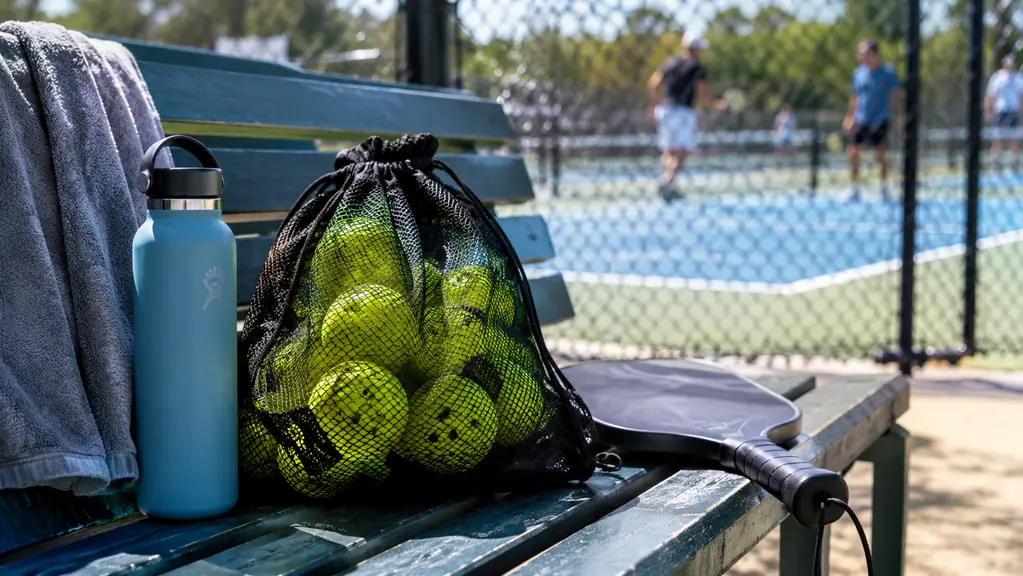
Who Should Buy Which
Here is how I would settle it if you are standing in the parking lot with your paddle bag open. If your group plays outdoors from late spring through early fall, buys in bulk, and wants every court to play the same from the first game to the fortieth, get the Franklin X-40. It is the tournament standard for a reason, and it is easier on the group fund when you are buying for two courts at once. If you play in the cold, if you have an elbow or a wrist that complains, or if you simply prefer a softer feel and a little extra spin grip, grab the Selkirk Pro S1 instead, or keep a few in your bag for the mornings that catch you off guard. And if you are truly torn, split the difference. Tell everybody to bring one of each to a Saturday round-robin, play both, and see which one survives your particular courts. That is what we did, and the X-40 won our group over. But I know plenty of players who voted the other way, and they are not wrong. I told that whole story once, start to finish, if you ever want the long version.
I will say one more thing in the Selkirk's favor, because it is fair. The players in our group who learned the game indoors on softer balls tended to prefer the S1 right away, while the ones who came from tennis liked the firmer Franklin. Neither camp was wrong. We just have different hands and different histories with the game, and a ball that feels like a rock to one person feels crisp and solid to another. That is why I keep saying there is no villain here. The only wrong move is buying a case of either ball sight unseen and pretending it will fix your dink game.
One more thing before the polite way of saying go buy the balls already. Neither of these balls is going to fix your third-shot drop or add three miles an hour to your serve. A ball only has to do one job, bounce the same way twice, and the Franklin X-40 does that more reliably for most of our season while the Selkirk Pro S1 does it better when the temperature drops. Pick the one that matches your mornings, not the one with the louder advertising. And if you want to understand why outdoor balls behave the way they do, I wrote up the reasons in plain English for anyone who has ever blamed a bad bounce on a bad ball.
The morning we made the final call, Carol and I stood by the cooler and counted what was left of both trial packs. The X-40s had the edge in bounce and had clearly taken more abuse, while the S1s had been kinder to my elbow on two cold mornings and had held their spin longer. We put Franklin on the official order sheet and told everybody to grab a few Selkirks on their own if they wanted them for cold weather. That arrangement has served us for three Mays now. It is not a dramatic story, and that is exactly the point. Most gear decisions at our level should be boring. Pick the ball that bounces the same way twice in a row, buy it in bulk, and spend your energy on the game instead of the equipment.
We have split one 12-pack four ways every May for three years, and that same bag still carries us through October.
Try the X-40 before you commit your whole cooler to one brand
A 12-pack split four ways is three balls apiece, which is exactly enough to judge a ball honestly over a few games. See today's price on Amazon and decide for yourself.
Amazon Check Today's Price on Amazon →