
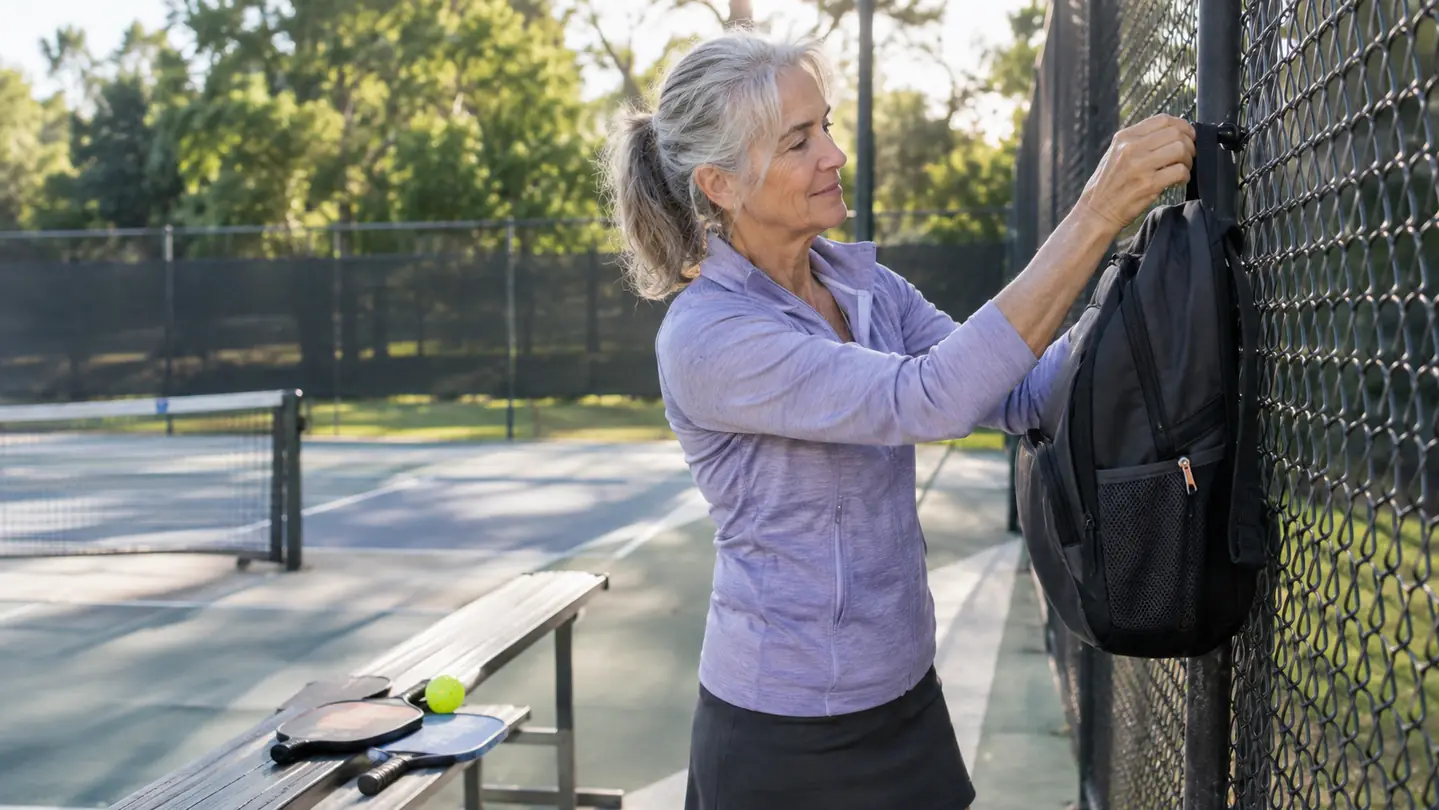
I have a confession to make. I bought the Mangrove pickleball bag in the middle of April, mostly because the fence hook caught my eye and partly because I was tired of my old canvas tote throwing its contents across the trunk every time I hit the brakes. For the first three weeks I loved it the way you love any new thing that costs more than the thing it replaced. Then the new wore off, and I kept using it anyway. That, to me, is the real test of a bag. A bag you only love while the tags are still on it is a bag you will re-buy next spring. A bag you still grab without thinking six months later is the one worth telling people about.
Here is what nobody tells you before you hit the buy button: the zipper pulls are small and fiddly when your hands are cold, the fence hook takes a little wiggle to seat on a thicker rail, and the shoulder strap will drift if you pack the lazy way. None of those are deal-breakers. They are the kind of thing you only find out after the return window closes, and they are exactly why I wanted to write this down. This is the review I wish I had read last April, written from the other side of seven months of hard use, with the good and the annoying both included.
The Quick Verdict
A roomy, well-organized pickleball bag with a genuinely useful fence hook, held back a little by small zipper pulls and a strap that wants you to pack carefully. It is still the bag I reach for every morning.
Amazon Check Today's Price →See the Mangrove Pickleball Bag on Amazon
I have used mine every morning since April. If the honest pros and cons above sound like your game, check today's price before the outdoor season sells them out.
Amazon Check Today's Price on Amazon →How I've Used It
I picked the Mangrove up on a Tuesday in the middle of April, a couple of weeks before the nets went up at the neighborhood park. My old tote, a canvas thing I bought at a craft fair, had finally given up. The handle had pulled loose, the zipper was being held together with a safety pin, and I had spent one too many mornings on my hands and knees fishing a ball out from under the bench while the other team waited. I wanted actual organization. I wanted my paddles off the wet grass. And I wanted a bag that could hang on the fence instead of sitting on a bench where sneakers, water bottles, and the occasional squirrel all had access to it.
Since that Tuesday, the bag has been to the rec center four mornings every week through the winter months, then to the park courts every morning it did not rain from May through October. It has been rained on, knocked off a fence by a gust off the bay, and left in the trunk through a stretch of July heat that melted a lip balm in the side pocket. It has also been on one road trip, a long weekend at a friend's cabin where we played on a court that had been poured barely a week before. My paddle lives in the padded pocket. My three spare balls live in their own pocket. My reading glasses, which I will not tell you how many times I lost in the old bag, live in the front pocket and only come out at the bench.
The organization is real. That is not the problem, and I do not want to bury the lead. The problem, the part nobody puts in the product listing, is in the details. The zipper pulls are small round tabs that are easy to grip when the bag is new and your hands are warm. Try them on a 40-degree morning at the park, or with winter gloves on at the rec center, and you will find yourself pinching and twisting to get a purchase. It is a small thing. It is also the first thing I would change if I ran the company.
The morning the bag won me over was a cold one, the third Saturday in May, the first day the nets were up at the park. I hooked the Mangrove to the fence, and my paddle hung there at the perfect height, right at my hip. I reached back without looking and pulled my paddle out, and I did not have to bend over or search or ask anyone to watch my stuff. Carol, who has been my doubles partner for four years, looked at the bag on the fence and said she was getting one. She did, two weeks later, and hers has held up the same way mine has. That is the kind of evidence I trust more than any rating.
The Zipper Story, Since Everyone Asks
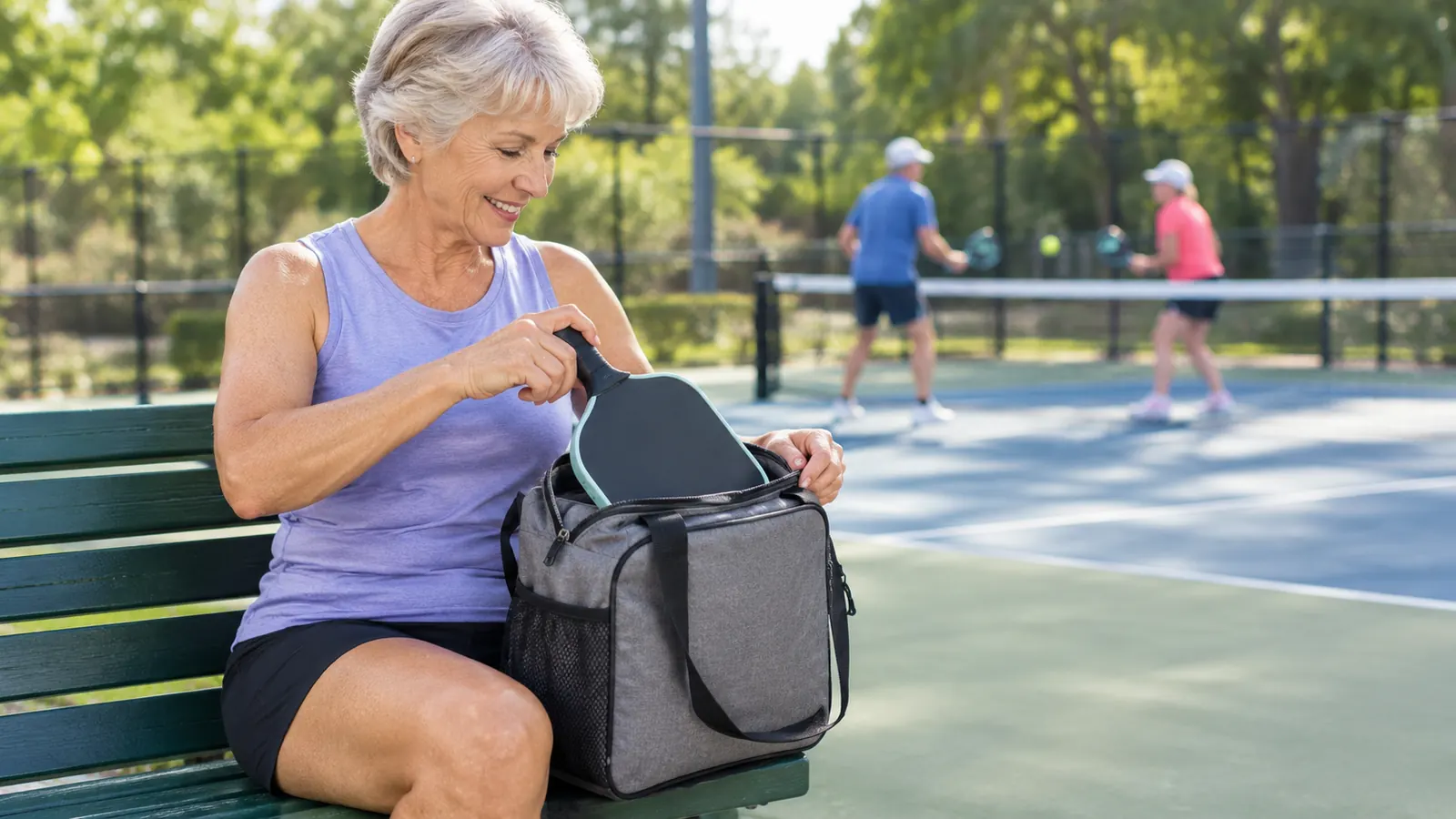
I will stay on the zippers a minute, because that is the honest-review part and because it is the thing I get asked about most at the bench. The Mangrove has five dedicated pockets, and once you count the main compartment, that is six zippers to live with. On a warm June afternoon they are all fine. In the spring, when Green Bay is still handing out frost warnings, my fingers are stiff by the time I hang the bag on the fence, and those little pulls ask for more pinching than my hands want to give. I have learned to open the ball pocket before my gloves go on. That is a real workaround for a real annoyance, and it is the sort of detail that never makes it into the product photos.
The zippers themselves are holding up better than I expected. No skipped teeth, no jammed corners, no moment where a pull comes off in my hand, which is what killed my last bag. The fabric around the zipper tape has not frayed even though I am careless about overfilling the main compartment and zipping it shut anyway. I think the stitching at the stress points is heavier than it looks in the pictures. So the verdict here is genuinely mixed, and that is exactly what I mean when I say nobody tells you. It is not a five-star zipper experience. It is a very good bag that asks you to learn two small quirks, and once you learn them, you stop noticing.
One more zipper note, because it is the kind of thing you only learn by living with a thing for a whole season. The front pocket, the one I keep my glasses in, runs a good long way across the front of the bag, and the zipper follows a gentle curve. That curve is what makes the pocket easy to get into without opening the whole flap. It is also where the zipper snags if you pull too fast. My rule now is to slow down at the bend. It costs me half a second. It saves me the kind of muttering that startles the couple on the next court.
The Fence Hook and the Pockets That Earned Their Keep
The fence hook is the reason I chose the Mangrove over two other bags I had narrowed the search down to, and seven months in, I still think it was the right call. It is a plastic hook molded into the back panel, and it opens wide enough to catch the rail of a standard chain-link fence. You angle the bag, hook it, and let it hang. My paddles stay dry. My water bottle stays upright. Nothing gets knocked to the concrete when somebody bumps the bench, because the bag is not on the bench.
What nobody tells you is that the hook does not fit every fence the same way. The rails at the park run one direction at the net posts and another along the sides, and on the side sections the hook grabs cleanly the first time. On the posts themselves, where the rail is thicker, I have to wiggle the bag side to side to seat it. It has never fallen, not once, even in the wind we get off the bay in October. But it is not a one-motion hang. You learn the wiggle. It becomes muscle memory by the second week, and then you forget you ever had to think about it.
The five dedicated pockets are, in the order I actually use them: the padded paddle pocket, which is the whole reason a pickleball bag can cost more than a tote and be worth it; the ball pocket, which holds three balls without bulging out of shape; the water bottle pocket, which takes a full 32-ounce insulated bottle and keeps it upright on the bench; the front pocket for my glasses; and a slim pocket on the side where my car keys and phone live during a game. What I notice at the end of a morning is not any single pocket. It is that I have stopped standing at the bench patting my hips and my pockets and the bench itself, hunting for things. That is the whole job of a bag. The Mangrove does it.
The Strap, the Balance, and My Right Elbow
I need to be honest about my own body here, because it changes how a bag feels. I have a touchy right elbow, a mild case of tennis elbow from thirty years of hauling instrument cases, and I notice strap pressure more than most people my age. The Mangrove's shoulder strap is padded, and the padding is real, not the thin foam strip some bags pretend with. But the strap is a little narrow where it attaches to the bag, and if I load the bag the lazy way, everything heavy in one compartment, the whole thing wants to slide off my shoulder unless I keep a hand on it.
The fix, once I figured it out, was to pack the heavy things low and close to my body. Paddles in the back pocket. Balls in the pocket on the same side. Water bottle in the pocket nearest my hip. That one change turned the bag from something I carried into something I wore. With the weight balanced that way, I can walk from the car to the courts and hardly feel it, and my elbow does not complain at the end of the week. If you are the sort of person who throws everything into one big compartment, this bag will punish you a little. Pack it with intention and it is genuinely comfortable. That is the honest trade.
The top handle deserves a sentence of its own, because I use it as much as the strap. It is wide and padded, and it holds the weight of the bag without cutting into my palm even when the bag is full. I grab it to lift the bag off the fence. I grab it to swing the bag into the trunk. I grab it to carry the bag into the rec center while my paddle is already in my other hand. A good handle is a small thing that you only notice when it is bad. This one is good, and I would never have mentioned it if I had not spent a season grabbing it.

Seven Months In: Would I Buy It Again?
I keep coming back to the same line, so let me just say it plainly. The new wore off and I kept using it anyway. That is the whole review. I have no reason to be loyal to a bag. I replaced my last one the first week it annoyed me, and I bought the same model of paddle twice only because I broke the first one being careless with it. The Mangrove has annoyed me in small ways since April: the zipper pulls, the strap, the wiggle at the net posts. And I have not once thought about replacing it. That is a stronger statement than any number of stars.
One practical note about keeping it alive. The bottom of the bag sits on wet concrete and dusty court lines all season, and by August it had picked up a dusty film. I cleaned it once with a damp cloth and a little dish soap, wiped it down, and let it dry on the fence overnight. It looked the way it did in April. The zippers got a drop of the same silicone lubricant I use on the garage door track, and the stiff feel at the curve went away for the rest of the season. Neither job took five minutes, and neither is in the instructions. I mention them because a bag that survives a season is usually a bag that got ten minutes of upkeep.
If I were starting over and had to choose between the Mangrove and a cheaper bag, I would still take the Mangrove, because the fence hook and the five pockets change how my mornings go. The bag has a few rough edges and I have told you every one of them. Would I want the next version to get bigger zipper pulls? Honestly, yes. Do I need the current one to have them? No. The bag works as it is. I pack my gloves first, I take the curve slow, and I hang it with the little wiggle. Those are three small habits, and they cost me about three seconds total. That is the honest review after the new wore off.
What I Liked
- The fence hook has not dropped the bag once in seven months, through wind, rain, and a bench knocked over by a gust
- Five dedicated pockets plus a main compartment mean my paddle, balls, glasses, keys, and water all have a fixed home
- Padded paddle pocket, real strap padding, and a top handle that does not dig into your palm
- Zippers and stitching have held up through a full outdoor season and a winter at the rec center
Where It Falls Short
- Small round zipper pulls are fiddly when your hands are cold or gloved; I open the ball pocket before my gloves go on
- The fence hook needs a side-to-side wiggle to seat on the thicker rails at the net posts
- The shoulder strap drifts if you pack the heavy stuff high; pack low and it settles
- The curved front pocket catches at the bend if you rush the zipper
It was rained on, knocked off a fence, and left in a hot trunk in July. Seven months in, I still grab it without thinking.
Who This Is For
This bag is for the recreational player who shows up three or four mornings a week, owns one paddle or two, and is tired of carrying a tote that dumps its contents across the trunk. It is for the doubles player at the park or the rec center who wants a water bottle that stays upright and likes the idea of hanging gear on the fence instead of leaving it on a shared bench. If that is you, the Mangrove will quietly solve problems you did not know you had, and it will still be solving them at the end of the season.
Who Should Skip It
Skip it if you are the minimalist who carries one paddle and one ball and likes it that way; the Mangrove will feel like more bag than you need. Skip it if you pack the lazy way, everything into one compartment, because the strap will slide and the bag will feel heavier and clumsier than it actually is. And if you play tournaments where you are in and out of your bag every twenty minutes, the small zipper pulls will wear on you faster than they wear on me. This is a recreational player's bag. It is very good at being that, and it does not pretend to be anything else.
Ready to Stop Digging for Your Balls?
The Mangrove is the bag I grab every single morning. If the honest list above matches how you play, check today's price and see whether it fits your routine too.
Amazon Check Today's Price on Amazon →