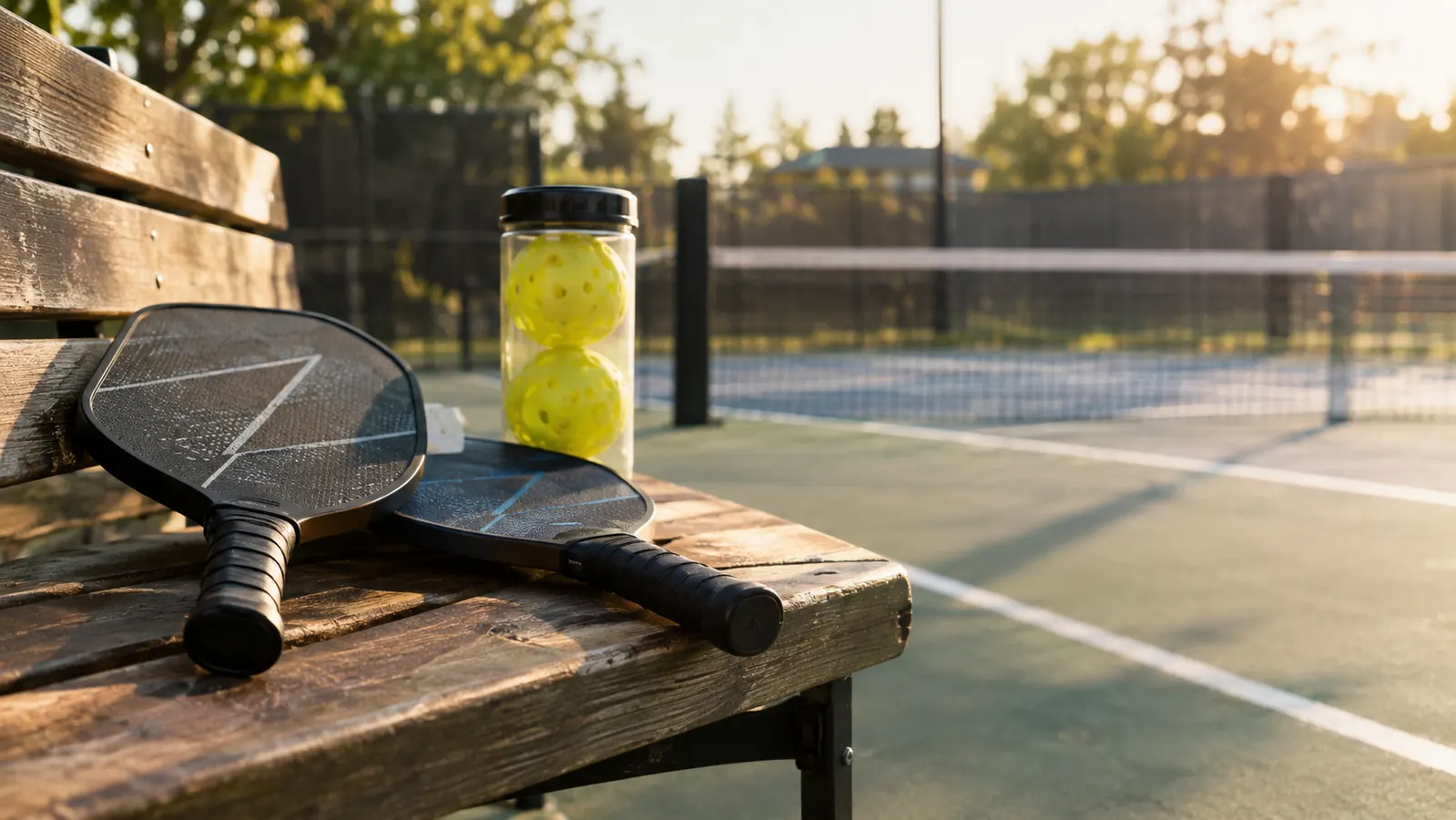
If you've played outdoor pickleball for more than one summer, you know the moment. You hit a fresh ball and it feels like it came out of the can. Then three games later it's scuffed, wobbly, and you're wondering if your paddle is the problem. I've been there. For the past two seasons, the ball that has held up best in my park bag is the Franklin X-40 from Franklin Sports. It's the ball I reach for on Monday mornings with Carol, and the one I tell new players to start with.
Picking an outdoor ball isn't about grabbing the one with the flashiest packaging or the biggest brand name. It's about how the ball behaves when the court is hot, the wind is up, and you've been hitting for an hour. Here's the process I use, with the Franklin X-40 as my example. If you're tired of replacing balls every week, this should help you get more games out of every can.
Start with a ball that already holds up on outdoor courts
The Franklin X-40 is USAP approved, bounces true in most conditions, and is the ball I keep buying for park games. Check today's price on Amazon and keep a fresh can in your bag.
Amazon Check Today's Price on Amazon →I'm going to walk you through five checks I do before I put a ball in my bag. Some of them take less than a minute. The payoff is a ball that still bounces true at game number ten, not just on the first serve.
Step 1: Look for a USAP-approved ball that bounces the same every time
Before you worry about brand, look for the USAP approval mark. This small stamp tells you the ball has been tested for size, weight, bounce height, and how it behaves in different temperatures. It's not a guarantee that you'll love the ball, but it means you're starting from a known baseline. The Franklin X-40 carries USAP approval, which is one reason I trust it when I'm on a court with players I've just met. That baseline matters, because a ball that's off by just half an inch can change how a game feels, especially if you're trying to keep your dinks low and your serves consistent.
When I first switched from a recreational ball to an approved one, the difference showed up in the bounce. A recreational ball can bounce a little higher or lower depending on the heat, which makes your dinks and drives feel different from one game to the next. An approved ball has to stay within a set range, so your shots behave the way you expect them to. That consistency is what lets you improve instead of constantly adapting to a bad ball. On a hot day, a poor ball can feel like a marshmallow, and on a cold morning it can feel like a baseball. USAP approval smooths out those swings more than any brand name can.
USAP approval also matters if you plan to play in a local tournament. Many leagues will not let you use a ball that is not on the approved list. You don't have to buy the same ball everyone else uses, but you should buy one that is actually legal for the game you want to play. I keep a spare can of the Franklin X-40 in my bag for just that reason. Last fall, a friend who forgot his ball ended up borrowing from me before a charity match, and I didn't have to explain why I was ready.
Step 2: Squeeze the seam and check the hole pattern before you buy
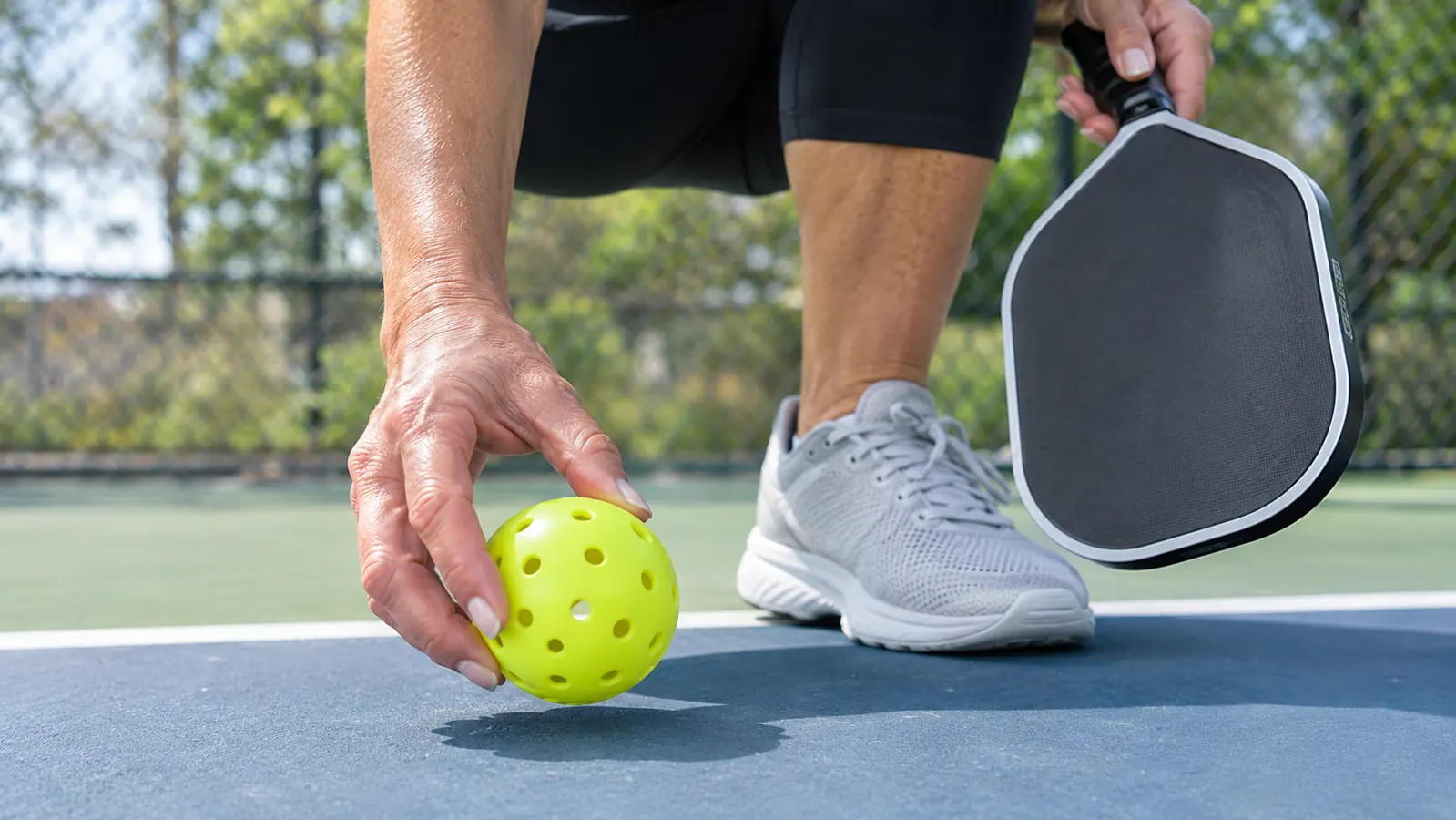
The next thing I do is hold the ball in my hand and give the seam a gentle squeeze. A good outdoor ball should feel firm but not rock hard. If it gives too much, it will bounce low and feel dead. If it's too hard, it can skip on the court and make your paddle vibrate, which matters to me because I have a tender right elbow from years of carrying instruments. The Franklin X-40 has a seam that feels right to me, not brittle and not flimsy. I like to squeeze it in the store before I buy, because it tells me more than the label ever will.
Then I check the hole pattern. An outdoor ball usually has 26 holes, while indoor balls have 40. The larger holes and lower overall weight give outdoor balls a slightly lower flight and better wind performance. The Franklin X-40 uses the standard outdoor pattern, and the holes look even and clean when I hold it up to the light. When the holes are consistent, the ball flies straighter and doesn't wobble on a hard serve. I know some people love indoor balls for outdoor play because they feel softer, but they tend to pick up speed in the wind and wear out faster on rough concrete.
If you can, open a can and roll the ball on the court surface before you buy a whole dozen. A ball that rolls true and doesn't wobble is a good sign. That test has saved me from buying some pretty-looking balls that were actually misshapen. The Franklin X-40 rolls straight on the smooth concrete at our park, and it keeps that feel after a dozen games. That's the kind of durability I look for, because it means I don't have to keep a mental list of which ball plays well and which one I should avoid.
Step 3: Match the ball to the temperature and surface you play on
Outdoor balls behave differently in the cold. If you play in spring or fall, you'll notice the bounce drops when the temperature does. In Wisconsin we get chilly mornings, and a ball that feels lively at noon will feel stiffer at eight in the morning. That's normal for any ball, but it's a reason to keep a spare can in your bag and switch to a fresher ball on the coldest days. I remember one morning in April when the ball felt like a rock until the sun came out, and we kept the same balls but the game changed completely.
The Franklin X-40 is built for outdoor play in a range of temperatures. I've used it on asphalt courts in July and on concrete courts in October. It doesn't crack easily on cooler mornings, but no outdoor ball is invincible. If you play several days a week, expect to rotate the balls in a pack so you're not constantly hitting with the oldest one. In very hot climates, the plastic can get softer and the ball may play a little slower. That's not a defect, just physics. Knowing that can save you from thinking your paddle has suddenly gotten weaker.
The surface matters, too. Asphalt is rougher and will wear a ball faster. Concrete is smoother but can make the ball skip if you hit it low. For most recreational players, the Franklin X-40 does well on both. If your local courts have cracks or chips, inspect the ball before every game and retire it at the first sign of a crack. That way you won't waste a good rally on a dead ball. I often play on a rough court near the community center, so I check my ball more often there than on the smooth court at the park.
Step 4: Plan a rotation so you're not always using the newest ball
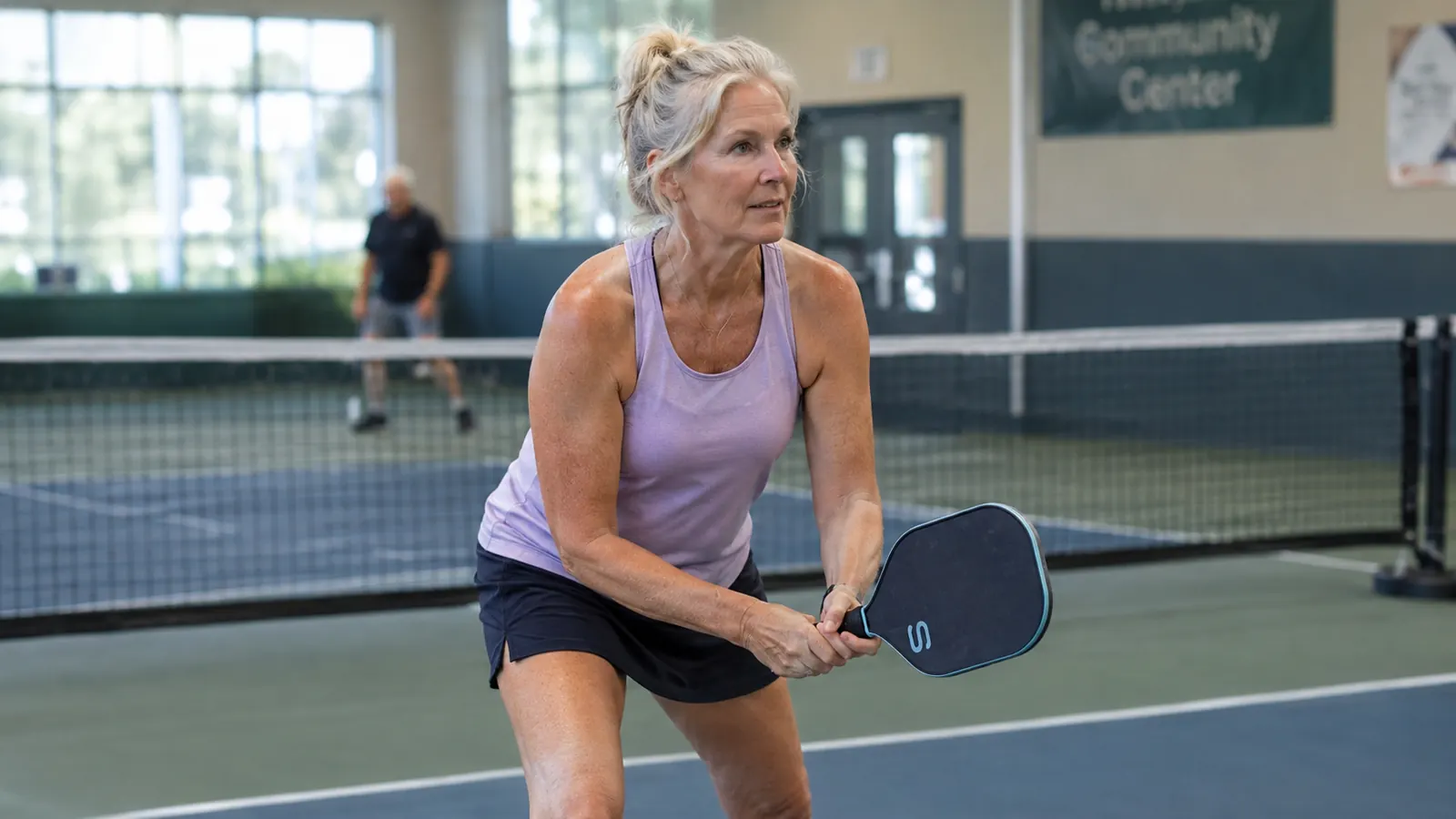
I know this sounds a little fussy, but I keep three balls in my bag: one brand new, one that's been played a few times, and one that's nearly ready to go. That way I'm not always grabbing the same ball and wearing it out in one session. On park courts, balls get tossed around between games, so a rotation keeps each ball in decent shape longer. At community center open play, people are always asking to borrow a ball. Having a rotation means I can share a fresh one without giving away my last good ball.
Some players buy a six-pack and use the balls until one cracks. I prefer letting the balls break in together so they all have a similar bounce. The Franklin X-40 seems to keep its bounce well past the point where a cheaper ball would flatten out. I've had the same can of three for most of the season, and they still play close to each other. That consistency is worth a lot on a busy court. Carol and I have a rule: if a ball splits, it goes in the trash, not back in the bag. That keeps the game honest and saves arguments.
Being a little organized helps everyone. When Carol and I play doubles with strangers, I'll offer a fresh ball from my bag rather than asking someone to use a cracked one. It keeps the game pleasant and avoids arguments. You don't need a label maker. Just put a small pocket on the side of your bag for retired balls and you'll always know which ones are still good. A few extra minutes of care means you'll never be the person who pulls out a lopsided ball right before a serve.
Step 5: Store them flat and out of the heat, then retire them when they crack
After a morning of play, put the balls back in a can or a mesh bag and keep them out of the direct sun in your car. Heat makes the plastic softer and can warp the roundness over time. I keep a ball tube in the back of my minivan, but I never leave the balls on the dashboard. It sounds like a small thing, but it can add weeks to the life of a good ball. I learned this the hard way when I left a can in the trunk one summer and came back to a set that wobbled more than a grocery cart.
When should you throw a ball away? The moment you see a crack or a flat spot, retire it. A cracked ball can split during a rally and stop the game. It can also affect how the ball comes off your paddle, which matters when you already have a sensitive elbow. I would rather use a slightly older ball that is still round than a cracked one that throws everything off. A flat spot is even worse, because it can make the ball bounce sideways on your first serve.
Some players try to tape a cracked ball. Don't. It will never play the same, and it's not worth the frustration. The Franklin X-40 is durable, but it's still a consumable item. Plan to replace your outdoor balls every few months if you play several days a week. When you do, you'll always have one that bounces like you expect, and the game will feel better for everyone. A fresh can is an easy thing to keep in the garage so you're never tempted to play with a broken ball.
What Else Helps
Along with choosing a good ball, the right paddle can make outdoor play more comfortable. I switched to a paddle with a larger grip and a little more weight in the head for better control. You don't need to spend a fortune, but you want something that feels secure in your hand, especially if your elbow is sensitive. Paddle grip size is one of those details that doesn't sound important until you play for three hours. A grip that's too small can make you squeeze harder, which tightens your whole arm.
Also, keep your paddle dry and don't leave it in a hot car. The face can delaminate and affect how the ball leaves your paddle. It's the same principle as the balls: heat is the enemy of consistency. If you store everything together in a lightly padded bag, you'll be ready for a pickup game without digging around. And if you're trying to decide between two balls, I'd rather have a durable one that stays true than a fancy one that cracks in a week.
The best outdoor pickleball is the one you'll still be happy to pick up on the last game of the morning.
At the end of the day, the right ball comes down to your courts, your temperature, and how often you play. The Franklin X-40 has been my answer for two seasons, but the important thing is to check a few balls for yourself, keep them in shape, and replace them before they let you down. If you do that, you'll spend less time thinking about equipment and more time playing the game you love. And that's really what matters when you're standing at the line on a sunny morning with a good friend.
Keep a can of Franklin X-40 in your bag
When you're ready to stock up, today's price on Amazon is a good place to start. The Franklin X-40 is the ball I keep buying for my park games, and I'll keep doing it as long as it holds up this well.
Amazon See the Current Price on Amazon →